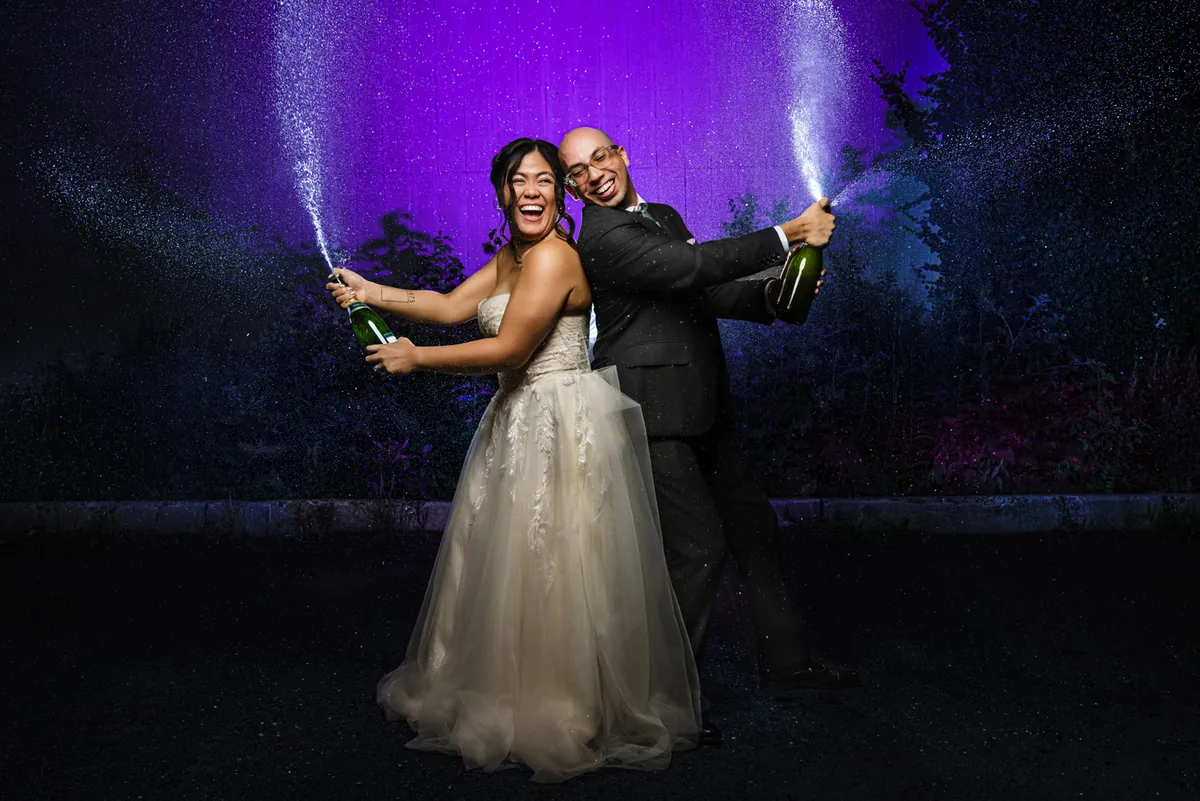
The single biggest difference between a snapshot and a striking, magazine-worthy image often comes down to one thing: how the light is controlled.
When couples ask why some wedding photos look dramatic and dimensional while others look flat, the answer is usually lighting technique. Specifically, whether the photographer uses on-camera flash or off-camera flash. It’s one of the clearest ways to tell an everyday photographer from a creative one, and understanding it will help you choose the right fit for your wedding day.
On-Camera Flash
On-camera flash is exactly what it sounds like, a flash mounted on top of the camera, firing directly at the subject. It relies on direct lighting, which tends to create a harsh, flattening look. The approach is simple and fast, which makes it useful for quick, well-lit shots and high-mobility event coverage where speed matters most.
The trade-off is creative control. Because the light comes from a single fixed direction, on-camera flash can’t shape or sculpt a scene. Images often end up looking less dynamic, with flat shadows and an unnatural quality, no matter how good the camera is.
Off-Camera Flash
Off-camera flash is where artistry takes over. By positioning lights away from the camera, often wirelessly controlled and placed at deliberate angles around you, a photographer gains full command over how light falls on a scene. That control is what creates depth, dimension, and drama.
With off-camera flash, a photographer can:
- Shape light to add depth — sculpting shadows and highlights instead of flattening everything.
- Simulate natural light or add rim lighting — separating you from the background for a polished, professional look.
- Tame difficult conditions — balancing harsh midday sun, rescuing a dark reception hall, or producing stunning results in dimly lit venues.
- Blend artificial and natural light seamlessly — maintaining a consistent, signature style regardless of what the lighting throws at them.
This flexibility is why off-camera flash is the preferred technique among portrait and wedding photographers who want images that genuinely stand out. You can see what it produces across my dramatic and creative style galleries.
Why It Matters for Your Wedding
Your venue’s lighting is unpredictable. A church may be dim, a ballroom may be dark, the sun may be brutal during portraits. A photographer who only uses on-camera flash is at the mercy of those conditions. A photographer skilled in off-camera flash can walk into any of them and still deliver consistent, beautiful, dramatic images.
The bottom line: off-camera flash is more work, more equipment, and more skill, but it’s the difference between photos that simply document your day and photos that feel like art. It’s the foundation of how I shoot every wedding.
My Approach
I bring a full lighting kit to every wedding and use whatever each moment calls for, natural light, on-camera flash for fast candids, and multiple off-camera flashes for those jaw-dropping portraits. The goal is a gallery with a consistent, elevated look from the first getting-ready shot to the last dance, no matter what the venue’s lighting is doing. If you’d like images that don’t look like everyone else’s, I’d love to talk through your day.
Frequently Asked
What is the difference between on-camera and off-camera flash?
On-camera flash is a flash mounted on top of the camera firing directly at you. It’s simple and fast, which makes it useful for quick candids, but because the light comes from a single fixed direction it flattens the scene and can’t sculpt anything. Off-camera flash positions lights away from the camera at deliberate angles around you, which gives the photographer full command of how light falls — and that control is what creates depth, dimension, and drama.
Why does off-camera flash matter for my wedding photos?
Because your venue’s lighting is unpredictable. A church may be dim, a ballroom may be dark, the sun may be brutal during portraits. A photographer who only uses on-camera flash is at the mercy of those conditions. A photographer skilled in off-camera flash can walk into any of them and still deliver consistent, beautiful, dramatic images.
Does off-camera flash cost more?
It represents more work, more equipment, and more skill, and that is genuinely reflected in what a photographer charges. But it’s the difference between photos that simply document your day and photos that feel like art. If you’re weighing what wedding photography should cost, my guide on wedding photography pricing breaks it down.
How can I tell if a photographer uses off-camera flash?
Look at their reception and night portrait work. Off-camera flash produces separation — a rim of light along the edges of the subjects lifting them off a dark background — and directional shadows that give faces shape. Flat, evenly lit faces against a dark room with a bright foreground and black background usually mean on-camera flash only. You can see what off-camera lighting produces across my dramatic and creative style galleries.
Do you use natural light too, or only flash?
Both, and everything in between. I bring a full lighting kit to every wedding and use whatever each moment calls for — natural light where it’s beautiful, on-camera flash for fast candids, and multiple off-camera flashes for the jaw-dropping portraits. The goal is a gallery with a consistent, elevated look from the first getting-ready shot to the last dance, no matter what the venue’s lighting is doing.