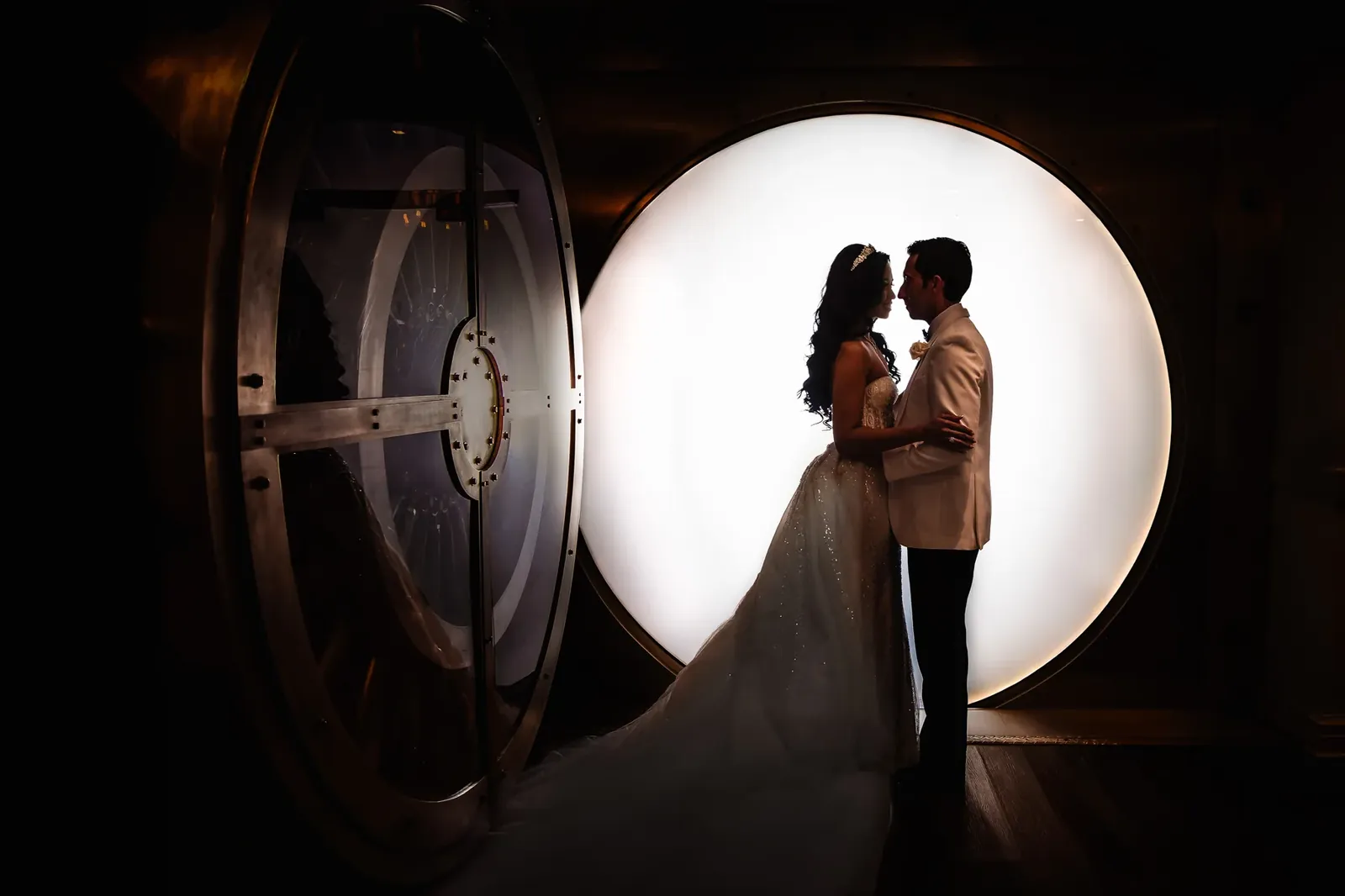
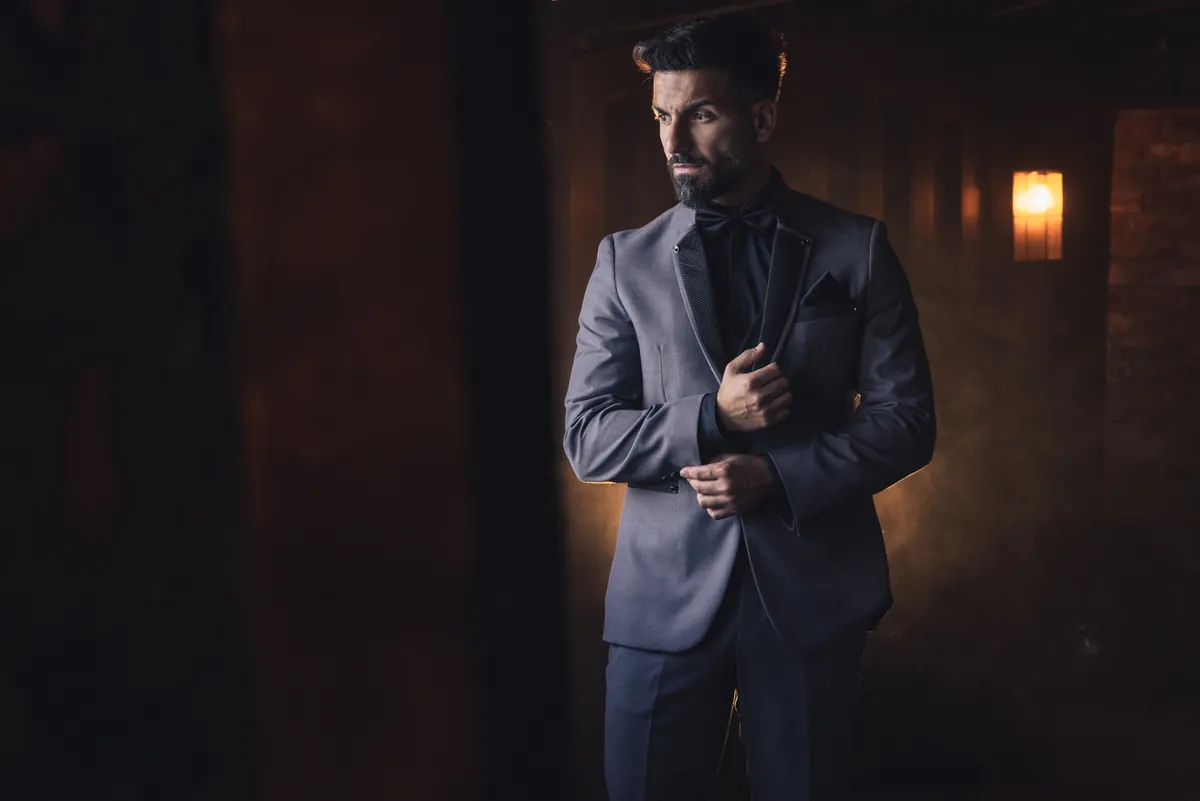
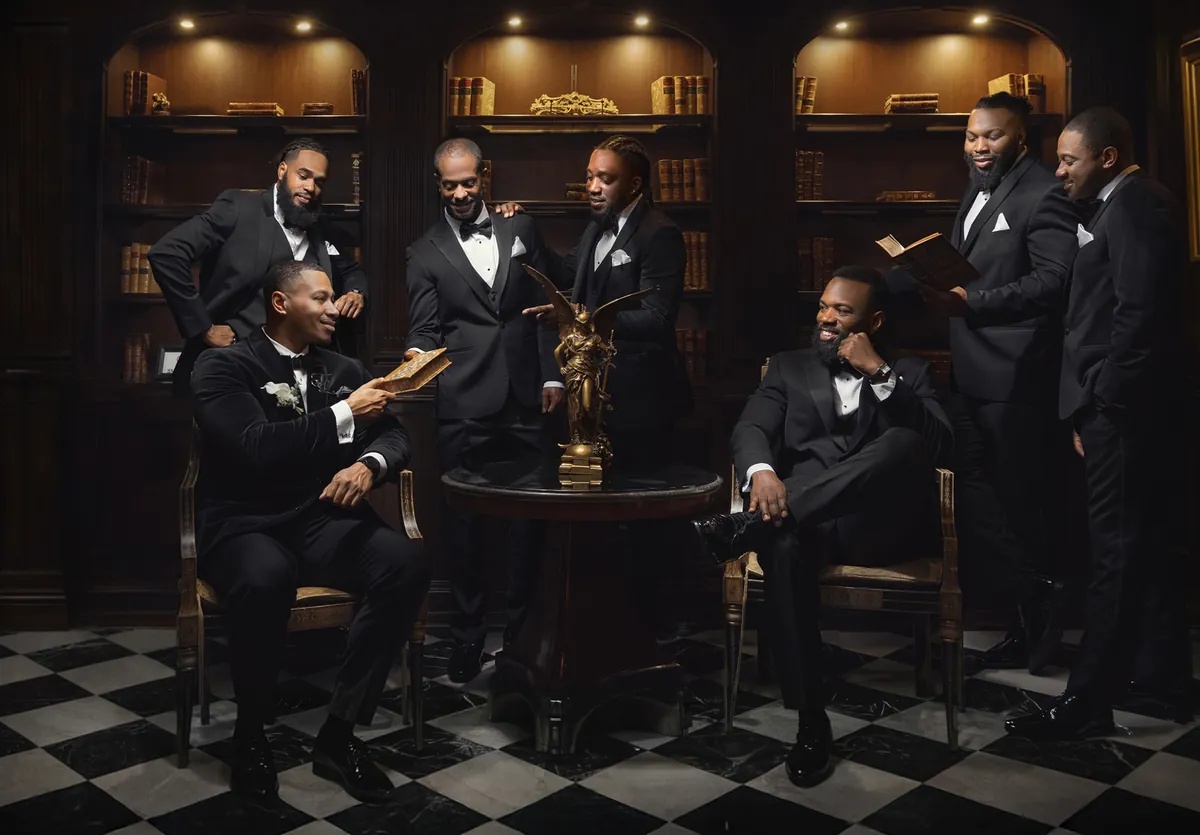
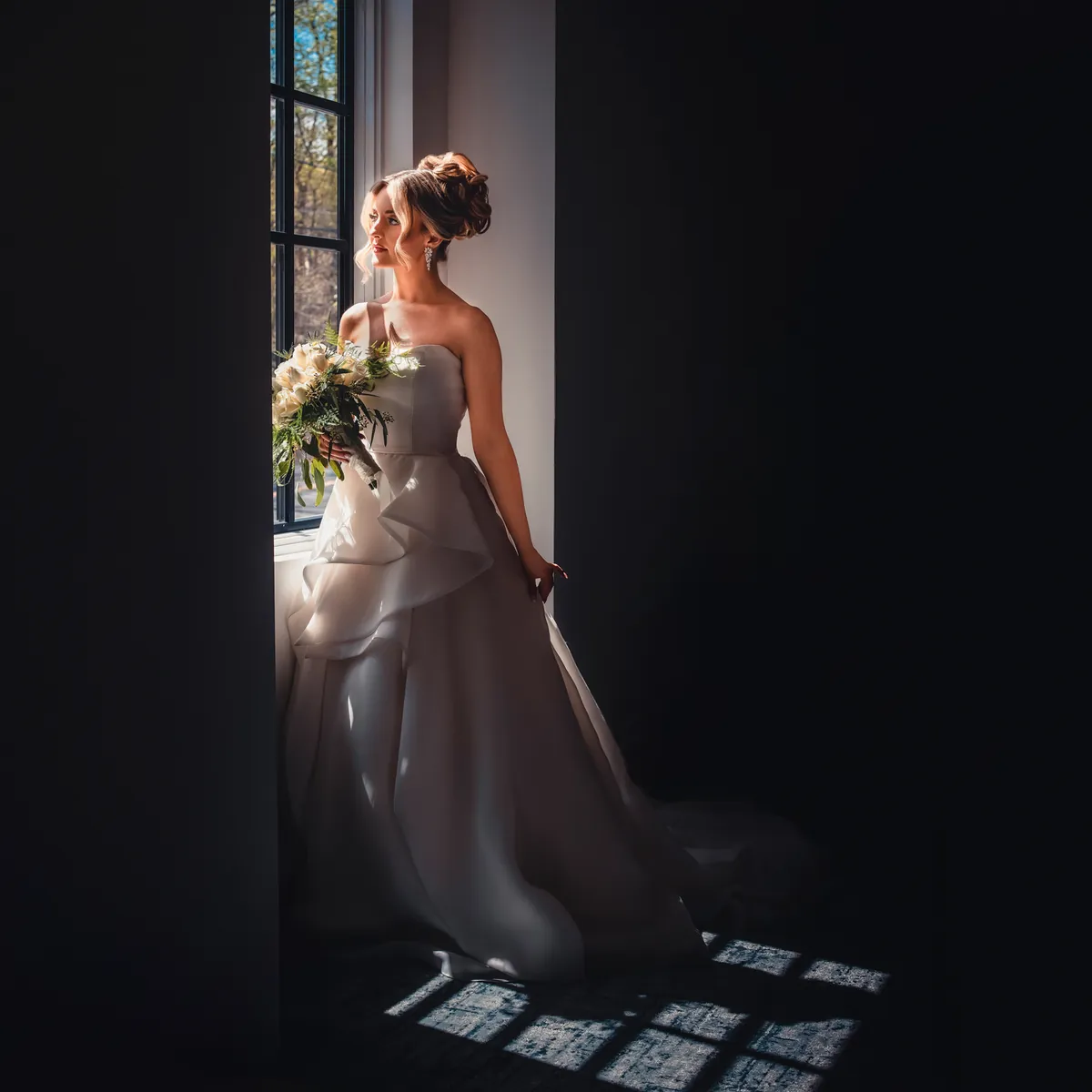
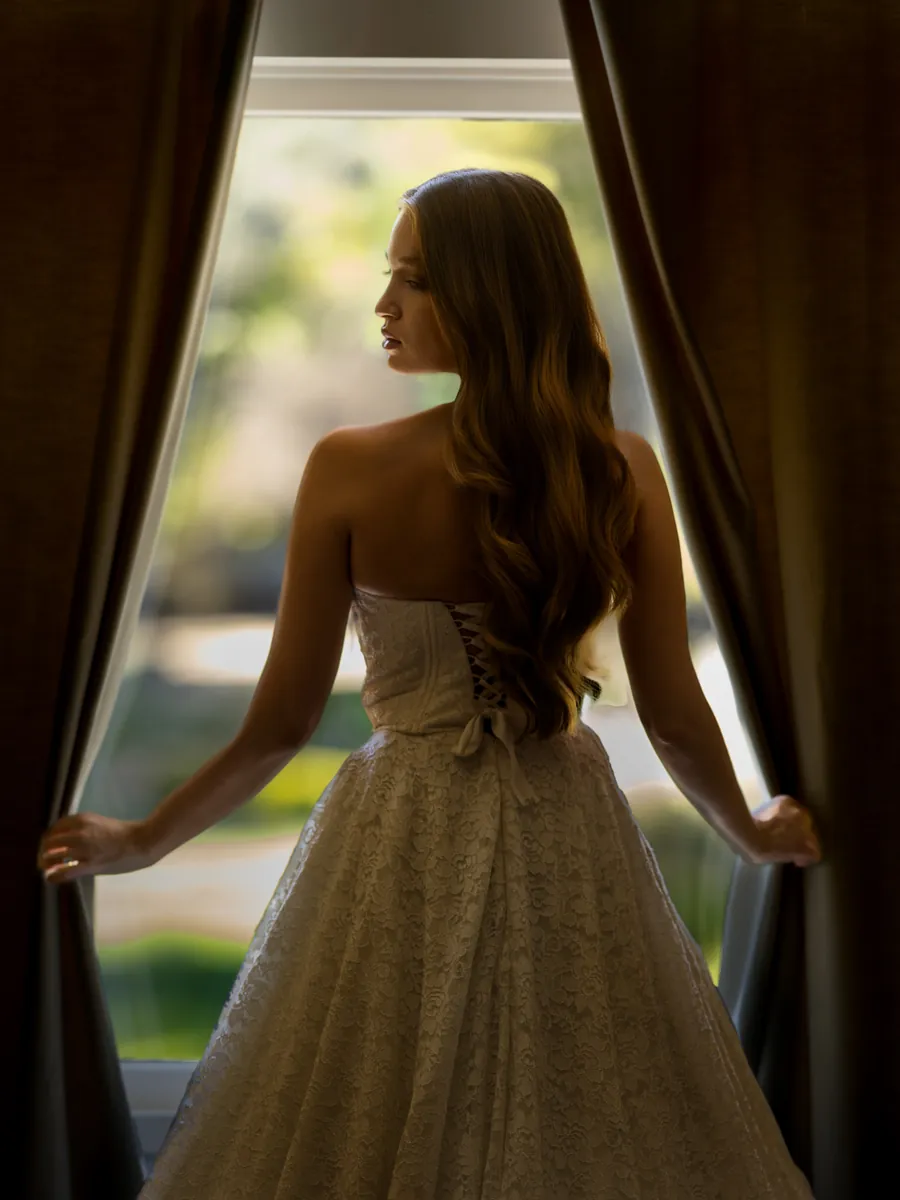
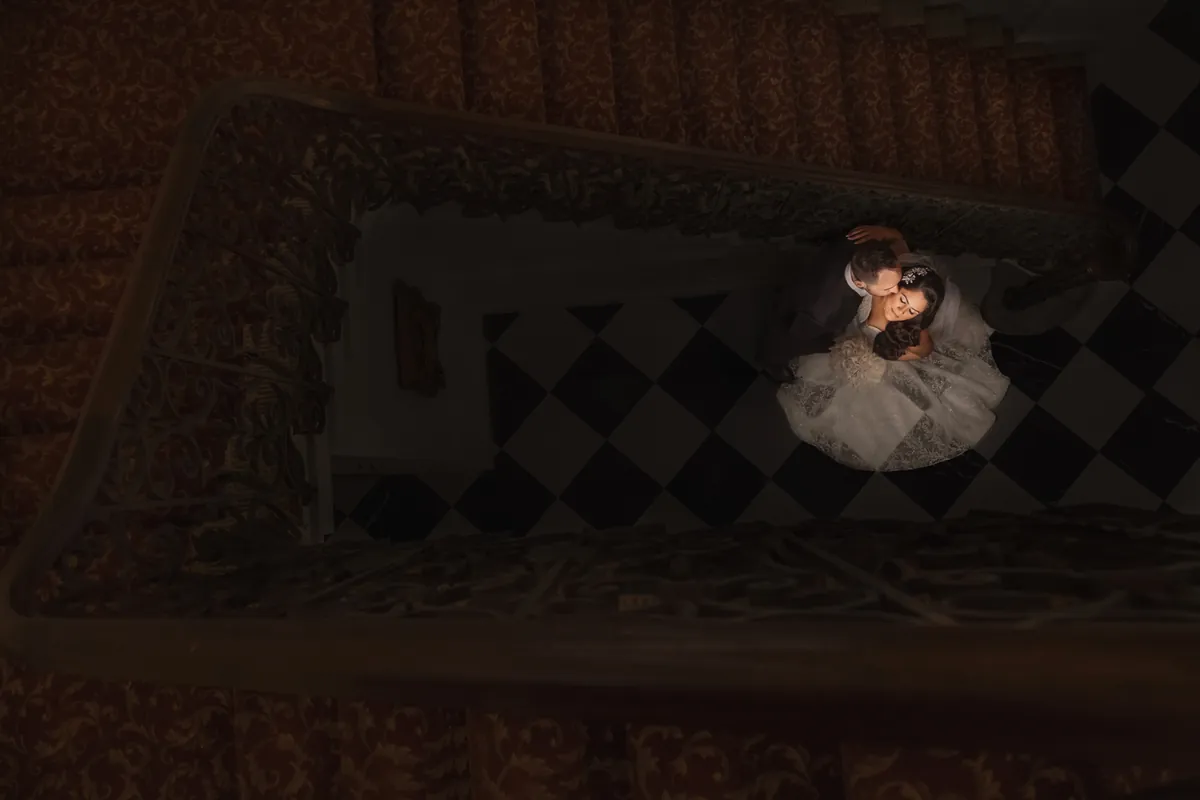
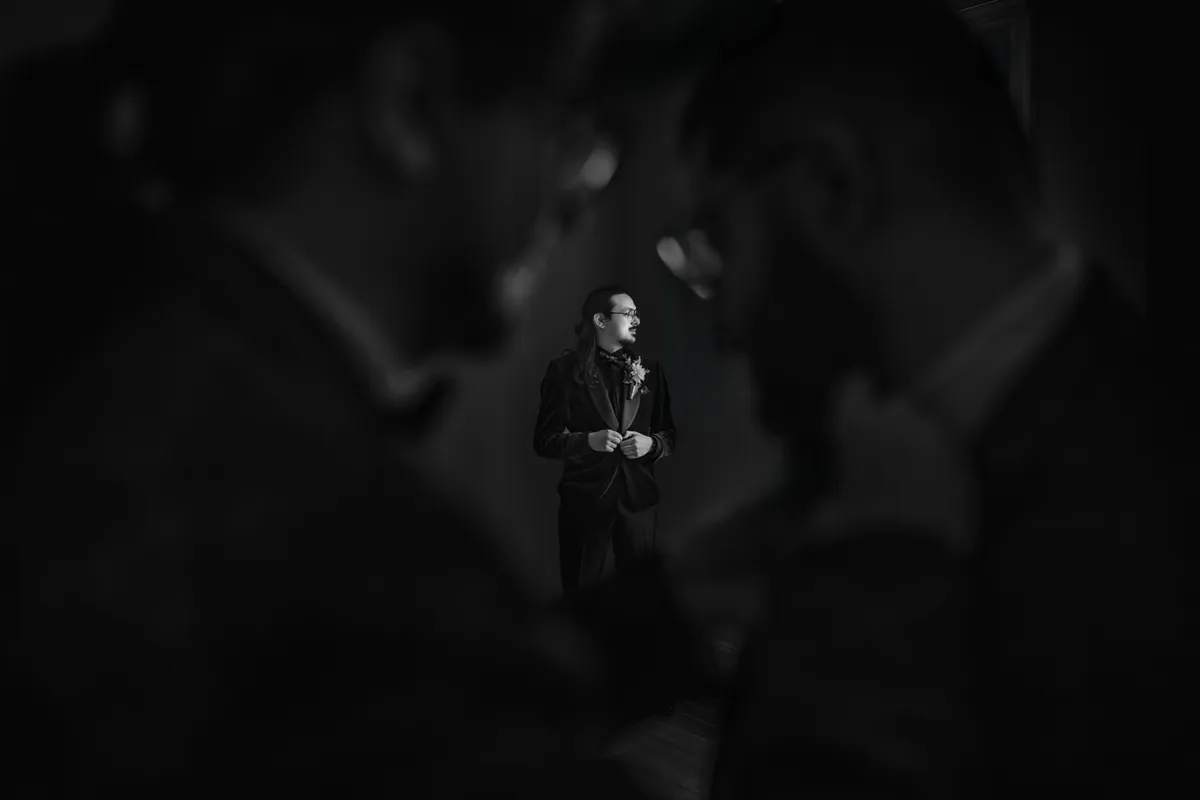
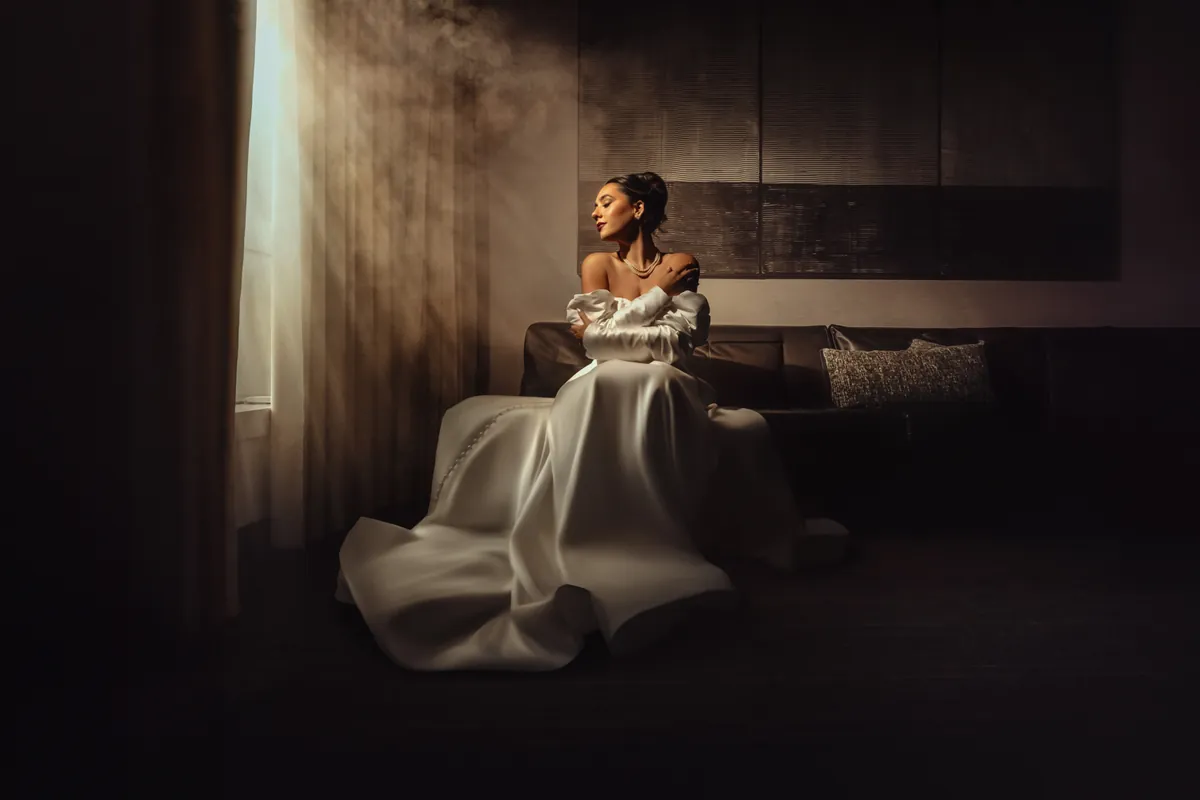
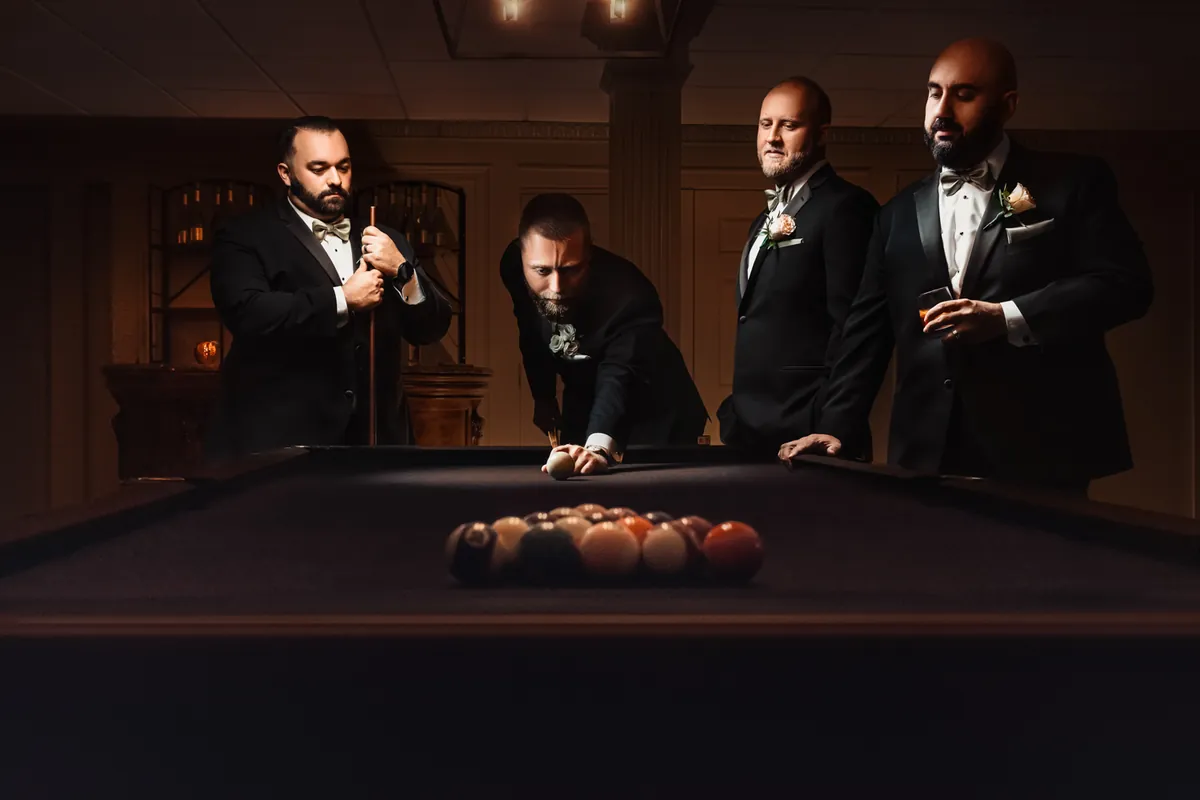
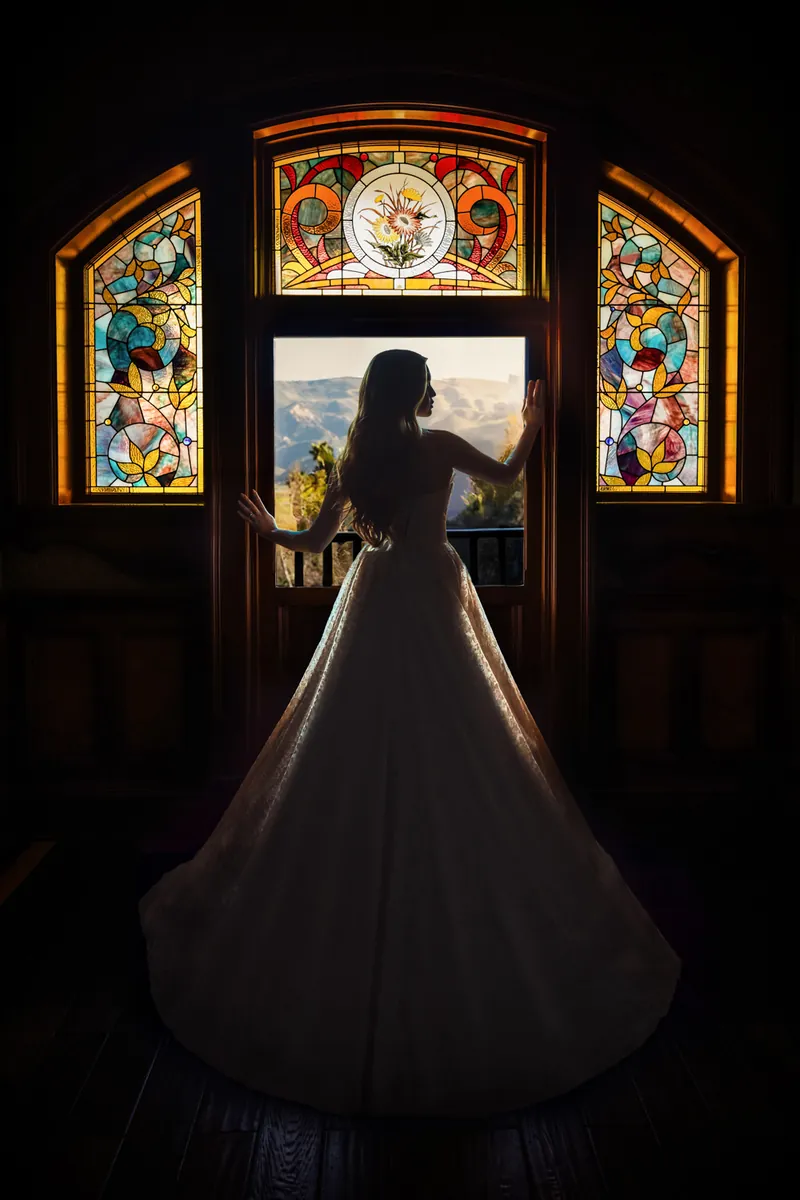
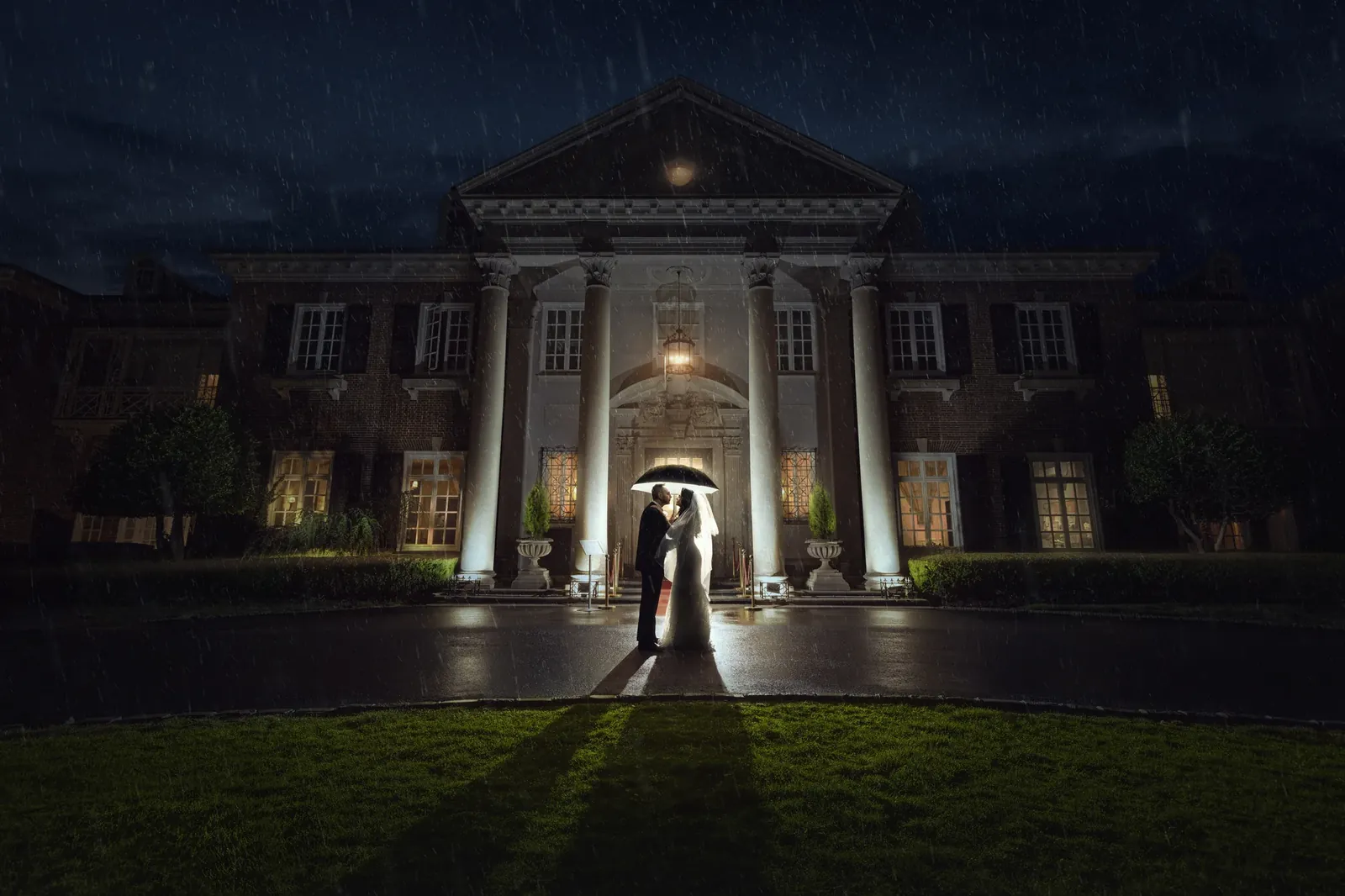
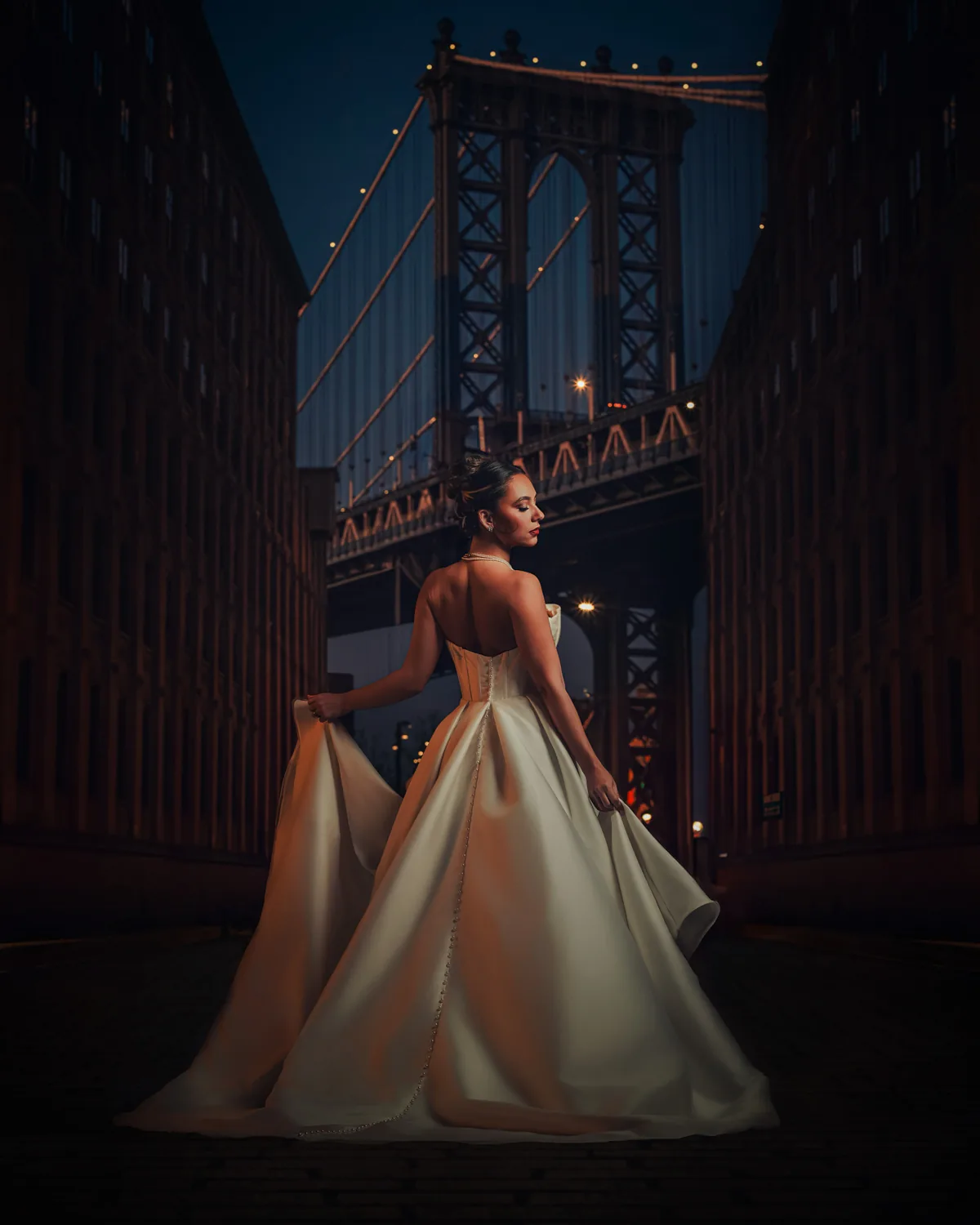
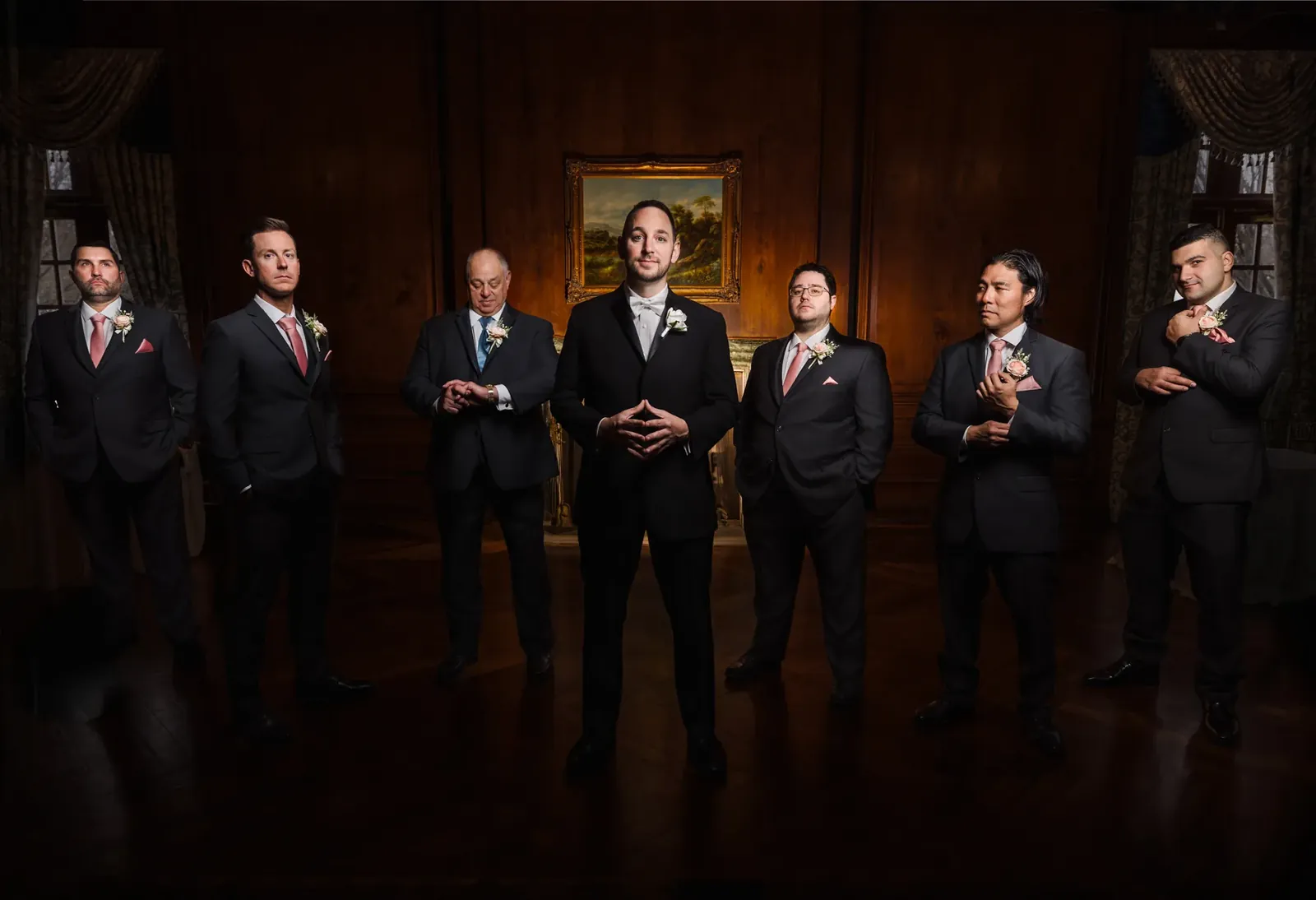
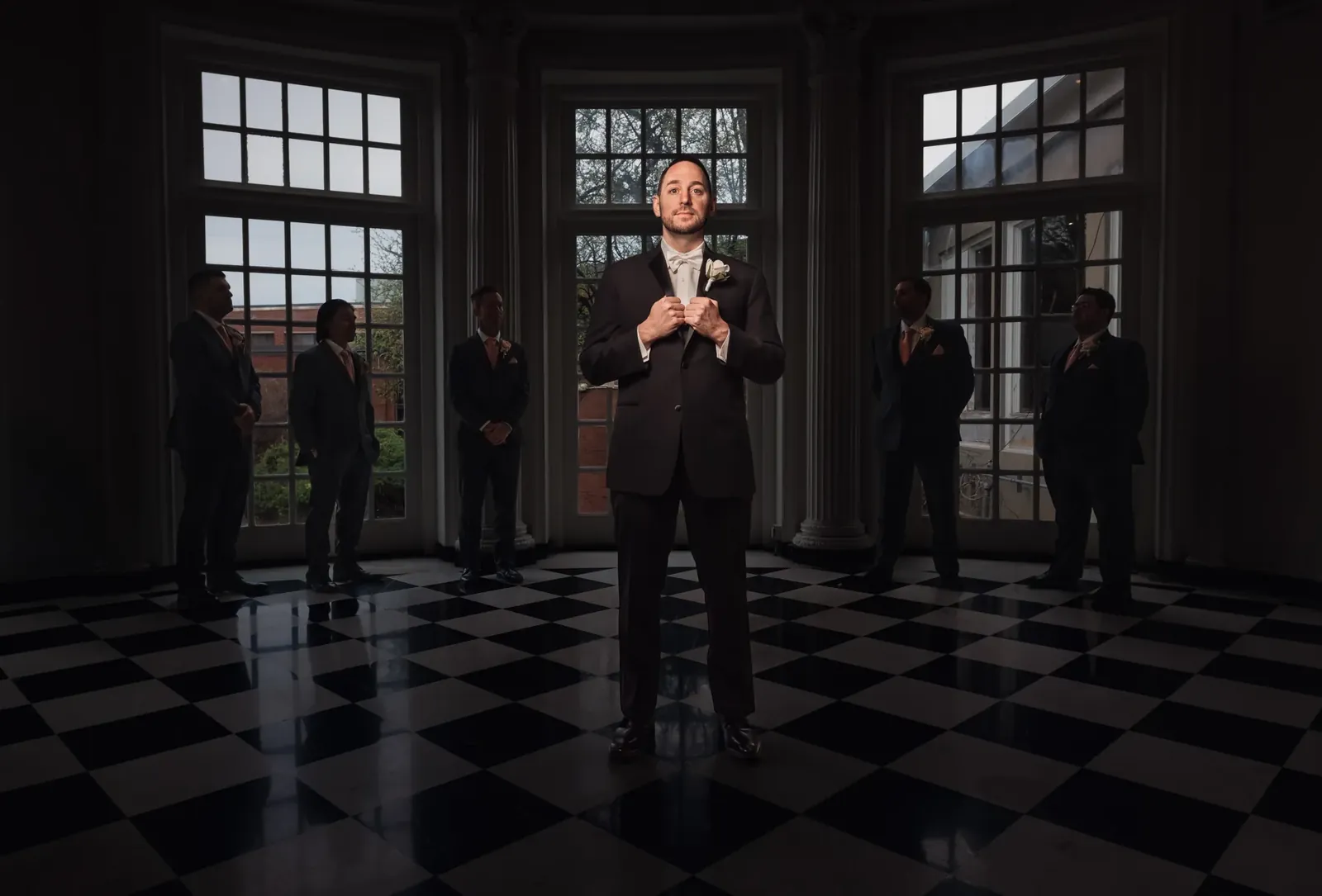
Dark, moody, cinematic.
Deep shadow, bold light, and editorial contrast. The dark and moody, cinematic frames that turn a portrait into a scene. This is the competition-winning work — sprinkled into your day, seasoned to taste, for the images that stop people in their tracks.
Where it shows up: a handful of standout portraits, often after dark or in a striking space. We grab a few when the moment and the location call for it — not at the expense of your timeline.
As an award-winning wedding photographer in New Jersey and Long Island, George shapes this dramatic, dark-and-moody style with bold off-camera flash for the standout portraits of your day. This cinematic, editorial lighting is the competition-winning work that sets him apart for couples seeking bold, artful wedding photography across New Jersey, Long Island, and Brooklyn.
Dramatic wedding photography is a lighting decision before it is an aesthetic one. Instead of lifting the whole scene evenly, you light deliberately — one source doing most of the work, shadow left where shadow belongs, and the subject separated from the background rather than blending into it. That is what gives an image weight.
The alternative, and the default at most weddings, is a flash mounted on top of the camera pointed straight at you. It is convenient and it is safe, and it produces a flat, evenly-lit record of what happened. Nothing wrong with that. It just will not look like the frames that stop people scrolling.
The technical answer is off-camera flash: lights positioned around you, controlled wirelessly, sometimes several on a single portrait. Moving the light off the camera is the entire difference — it creates direction, and direction creates shape. A face lit from the side has structure; a face lit from the lens does not.
It also takes equipment that has to be carried and set up through a wedding day, and time to place it. That is the honest trade-off, and it is why this style is a handful of standout portraits rather than the way an entire day is shot. Ten deliberate minutes produces the image that ends up on your wall.
If you want the full explanation of the lighting itself, I wrote it up in off-camera vs on-camera flash.
After dark, almost always. Once the sun is down, ambient light stops competing and a single well-placed source can own the frame entirely. Night portraits outside a lit venue, a first dance with the room dark behind you, a corridor or staircase with nothing else in it — these are where the style earns its keep.
It also works in the middle of the day in a strong architectural space. A vaulted ceiling, a dark ballroom, a stone archway, a room with one window — anywhere the environment already has contrast, the lighting can lean into it rather than fight it.
Reception effects fold into this naturally. Cold sparks and low fog are both lighting problems as much as spectacle, which is why they belong in this conversation — see cold sparks, done right and dancing on the clouds.
Time, mostly. Setting a light takes minutes that come out of somewhere, which is why the plan matters more than the gear. On a well-built timeline the dramatic portraits happen in a protected window — often just after sunset, or during the reception when you can step out for ten minutes without missing anything.
It also costs more to hire. More equipment carried and set up, and a single creative edit taking fifteen minutes to an hour rather than seconds. That is the real reason creative photography prices differently, and it is worth understanding before you compare quotes — here is how NJ and Long Island pricing actually breaks down.
It suits couples who want a handful of images that look like film stills rather than a uniform album, and who are comfortable stepping away for ten minutes to make them. If you want every frame bright, airy and evenly lit, this is not your photographer, and that is a real answer rather than a polite one — style is very hard to change, so match it first.
Most couples do not choose one style exclusively. A wedding day naturally holds all three — documentary coverage through the morning, clean editorial frames in good light, and a few dramatic portraits when the moment allows. Here is how the three fit together across one day.
George photographs one wedding per day. Send your details and we'll confirm availability for your date.
Your request is in. George will be in touch shortly to confirm your date.