Nobody books a photographer thinking about the car. But after twenty years of wedding days across New Jersey, Long Island, and Brooklyn, I can tell you that transportation decides more of your photo timeline than almost anything else you’ll choose.
Here’s the part couples don’t see coming. Every minute spent in transit is a minute not spent photographing. That’s obvious enough on paper. What isn’t obvious is that transit time is almost never the number your map app gives you, and the difference — the loading, the traffic, the vehicle that parks on the wrong side of the entrance — comes directly out of your portrait time. Not out of the cocktail hour, not out of dinner. Out of the photos.
This guide is the transportation conversation I have with couples during planning, written down. If you want the same logistics from the other side of the windshield, Tina at Luxury Wedding Connections wrote an excellent companion piece on coordinating wedding photos and transportation that covers the chauffeur’s perspective in real detail.
Transit time is photo time you’re spending
Take whatever drive time your phone shows you. Add fifteen minutes for loading and unloading. Add another fifteen because the day is running behind — it always is. A twenty-minute drive from the getting-ready suite to the church is realistically a fifty-minute block on a wedding day timeline.
That’s not pessimism, it’s arithmetic. Loading a bridal party into a vehicle is never instant. There are dresses to arrange, bouquets to hand off, heels to change into, and one last bathroom trip that nobody planned for. Multiply that by eight bridesmaids and you have a fifteen-minute event that Google Maps knows nothing about.
I go deeper on this in my wedding day timeline guide, but the short version is that buffer time is the cheapest insurance in a wedding day. When it’s missing, it gets taken out of portraits.
The arrival shot — and how it gets lost
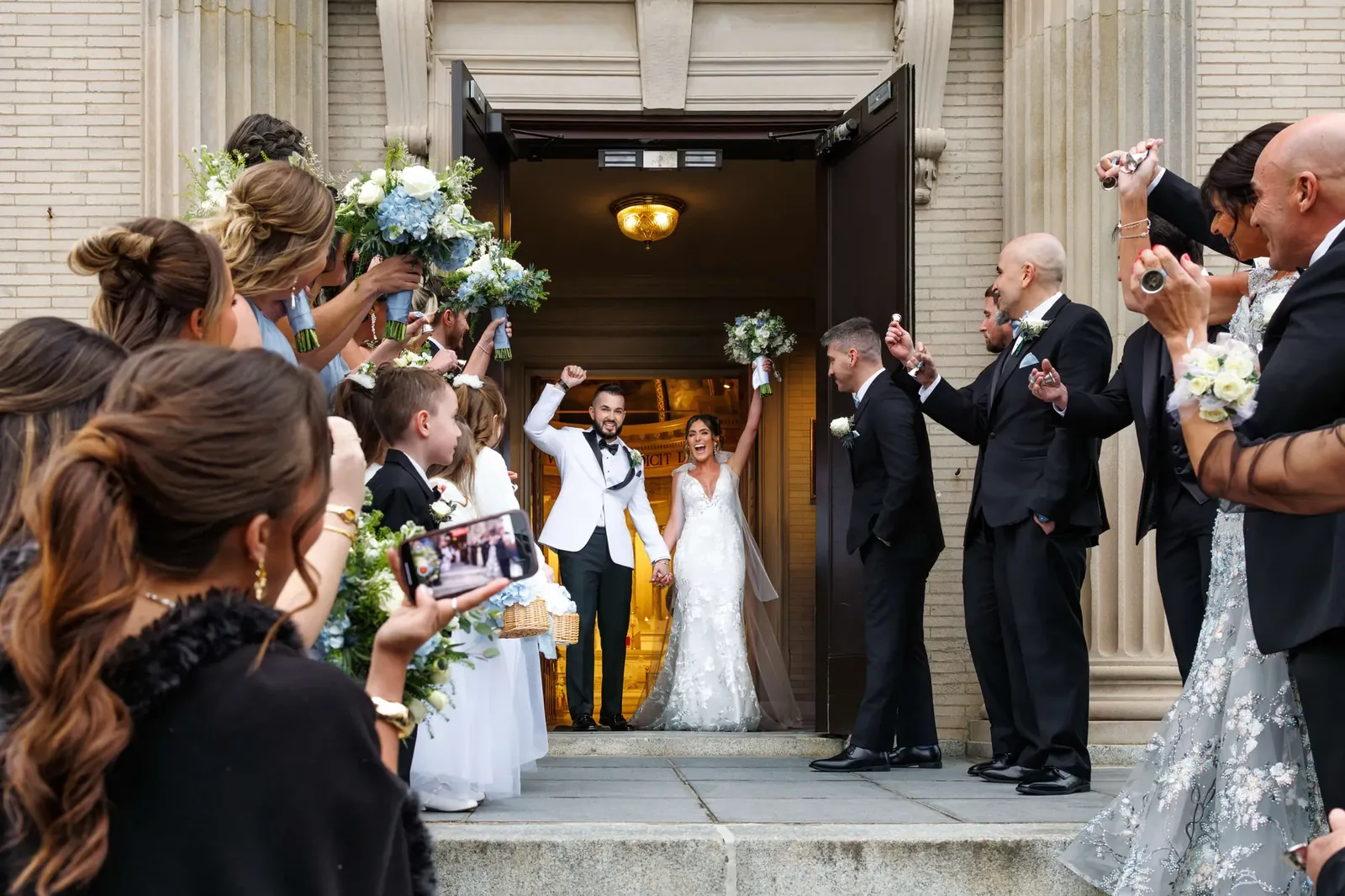
The door opens. She steps out. Someone’s holding the train. That sequence is ninety seconds long and it never happens twice.
Protecting it takes almost nothing, but it takes coordination. The vehicle needs to stop with the door facing the entrance rather than the street. I need to be out of my car and in position before the door opens. And nobody exits until I signal — which sounds fussy until you’ve seen a bride emerge behind a parked van while the photographer is still crossing the parking lot.
A chauffeur who has done hundreds of weddings does this without being asked. One who mostly drives airport runs does not. It’s the single clearest difference between a wedding transportation company and a car service.
Golden hour doesn’t wait for traffic
Golden hour is the last hour before sunset, and the best light in it is the final thirty minutes. If we’re leaving the reception for portraits at an off-site location — and some of my favorite images come from exactly that — the vehicle needs to be at the venue door twenty minutes before that window opens. Not at the start of it.
Arriving at a location twenty minutes into golden hour instead of at the start of it is the difference between a complete portrait set and two rushed frames in fading light. The sun sets on its own schedule. It has never once waited for a limo stuck behind a wedding party that couldn’t find their shoes.
If you’re choosing an off-site portrait location, my favorite photo session locations guide covers the spots worth the drive across Staten Island, Brooklyn, Long Island, and New Jersey — including which ones need permits, which changes the timing math again.
Bridges and tunnels are the real timeline risk
In this metro area, the largest single source of timeline failure isn’t the hair and makeup team. It’s the Verrazzano, the GWB, the Lincoln and Holland Tunnels, and the LIE.
Any of them can add thirty to sixty minutes on a Saturday afternoon with no warning whatsoever. If your day crosses one — getting ready in Brooklyn, ceremony in Staten Island, reception in New Jersey is a common pattern — that crossing needs a dedicated buffer beyond normal travel time. And ideally a driver who already knows the alternate route before anyone needs it.
This is exactly why I ask for the full transportation plan during our planning call, not the week of. If I can see the route, I can tell you where the timeline is going to break before it does.
What each type of vehicle does for your photos
Classic and vintage cars
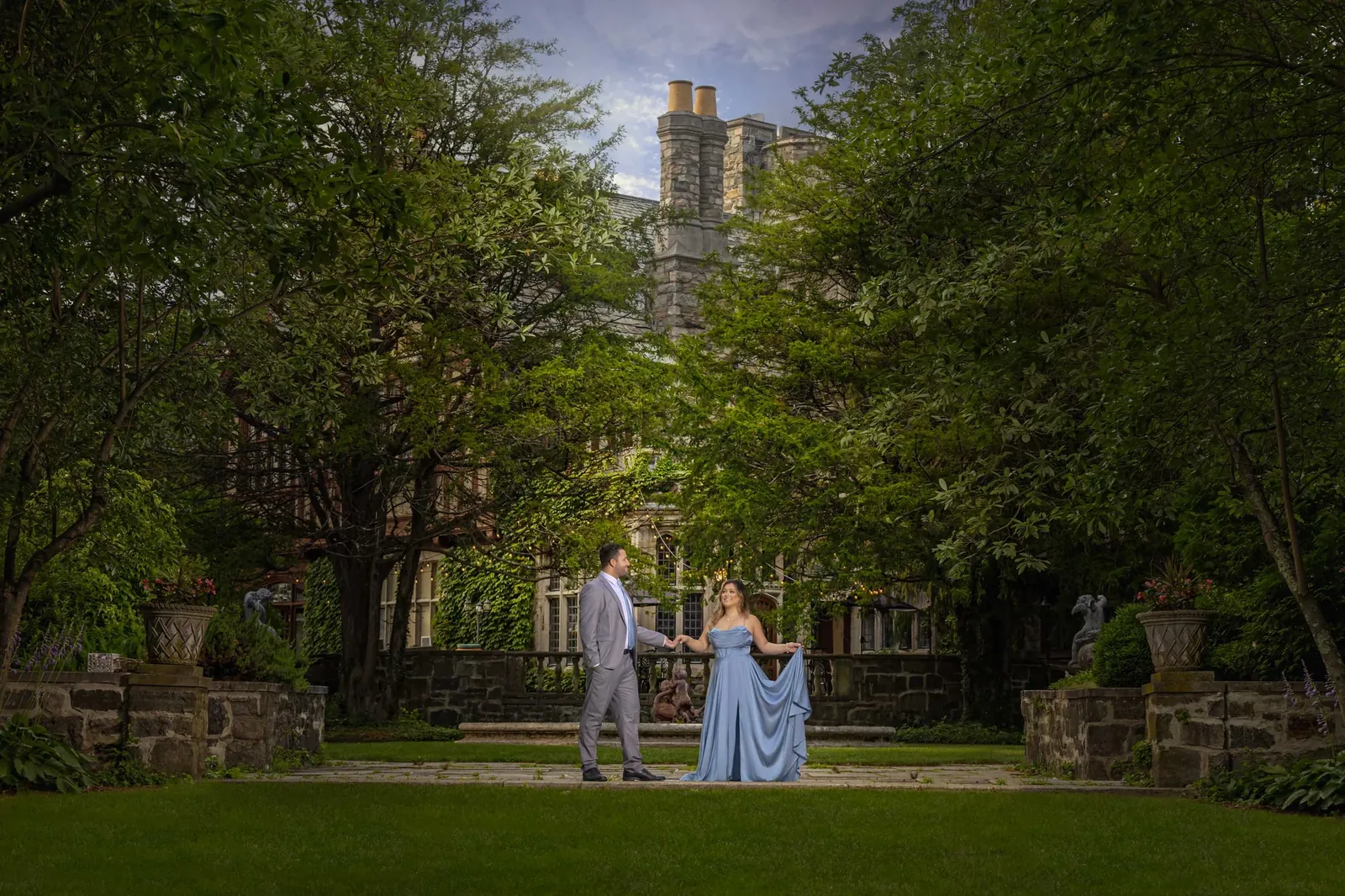
These aren’t transportation, they’re a portrait subject. A vintage Rolls or a restored classic gives you an entire portrait setup that costs no extra time, because the car is already going to be at the venue. If you’re considering one, tell me and I’ll build fifteen minutes around it.
Stretch limousines
The long door line makes for a clean, formal arrival, and the interior gives you a workable frame for candids in transit if the windows aren’t heavily tinted. Ask about the tint — it’s the one spec that changes what’s possible inside.
Party buses
Excellent for bridal party energy. Everyone’s together, the mood is loose, and the candids are genuine. The catch is the lighting: most party bus interiors run colored LED, which turns skin tones purple or green unless I’m correcting with flash. Not a problem, just something I need to know is coming.
SUVs and sedans
The most discreet option and the cleanest against a formal venue entrance. Nothing competes with the dress in the frame.
One request that costs nothing: ask that the vehicle be detailed the morning of, not the day before. A car photographed at a venue entrance in direct sun shows every water spot and fingerprint on the door. It’s in the background of the arrival shot, and it’s the one thing I can’t fix in editing without an unreasonable amount of retouching.
Who rides where
A small decision with an outsized effect on your gallery. When the bride and her parents ride separately from the bridesmaids, you get quiet moments — a father seeing his daughter in the back seat, a mother adjusting a veil. When everyone piles into one bus, you get energy and laughter. Both are worth having. Just know which one you’re choosing.
And a practical note: I generally don’t ride with the wedding party, because I need to arrive first. Getting to the destination ahead of you is what makes the arrival sequence possible at all. The exception is when candid in-transit coverage is specifically what you want — then I ride along and we plan the arrival differently.
The transportation company I send couples to
Most of what’s above only works if the person driving already thinks this way. That’s rarer than it should be.
Luxury Wedding Connections
Tina runs Luxury Wedding Connections as chauffeured luxury wedding transportation across New Jersey and New York — Brooklyn, Long Island, Staten Island, and Westchester — with classic cars through party buses in the fleet.
What makes her worth recommending isn’t the vehicles, it’s that she handles the wedding planning and briefs the chauffeurs herself rather than passing bookings to an associate. When I tell a driver where I need the car positioned for an arrival, that instruction has already been given. She writes about the same coordination from her side in her guide to wedding photos and transportation, and it’s worth reading before you book anyone.
She’s one of several vendors on my preferred professionals list — the videographers, beauty teams, and entertainment I trust beside me on a wedding day.
Five questions to settle before your wedding day
- What time does the vehicle arrive, and is that the pickup time or the arrival time? These are frequently not the same number.
- How many trips is the vehicle making, and does it have to return for a second group? A single vehicle doing two runs doubles every buffer.
- Does the driver have my number, and do I have theirs? Ninety percent of day-of transportation problems are solved by one phone call that couldn’t be made.
- Where is the vehicle positioned at each stop? Door toward the entrance, not the street.
- Is there a plan for the golden hour departure, or does the vehicle leave after the ceremony? This one catches people.
Frequently Asked
How much travel time should I build into my photo timeline?
Map time, plus fifteen minutes for loading, plus fifteen for the day running behind. A twenty-minute drive is a fifty-minute block. That sounds excessive until the first time it isn’t.
Does the type of vehicle really affect the photos?
More than you’d think. A classic car is a portrait setup you’re getting for free. A party bus gives great candids but the LED interior lighting needs flash correction. An SUV is the cleanest against a formal entrance. And a car detailed the morning of photographs very differently from one detailed the day before.
What is the arrival shot?
The door opening and the bride stepping out at the church or venue. Ninety seconds, unrepeatable, and easy to lose. It needs the vehicle positioned with the door toward the entrance, me in place before the door opens, and nobody exiting until I signal.
How do bridges and tunnels change the timeline?
They’re the biggest timeline risk in this area. The Verrazzano, the GWB, the tunnels, and the LIE can each add thirty to sixty minutes on a Saturday with no warning. Any crossing needs its own buffer, and a driver who knows the alternate route before it’s needed.
Should you ride with us?
Usually not — I need to arrive first so I’m in position when you pull up. If you specifically want candid coverage in transit, I’ll ride along and we’ll plan the arrival a different way.
What time should the car come back for golden hour portraits?
Twenty minutes before the window opens, not at the start of it. Golden hour is the last hour before sunset and the best of it is the final thirty minutes. There’s no getting that time back.