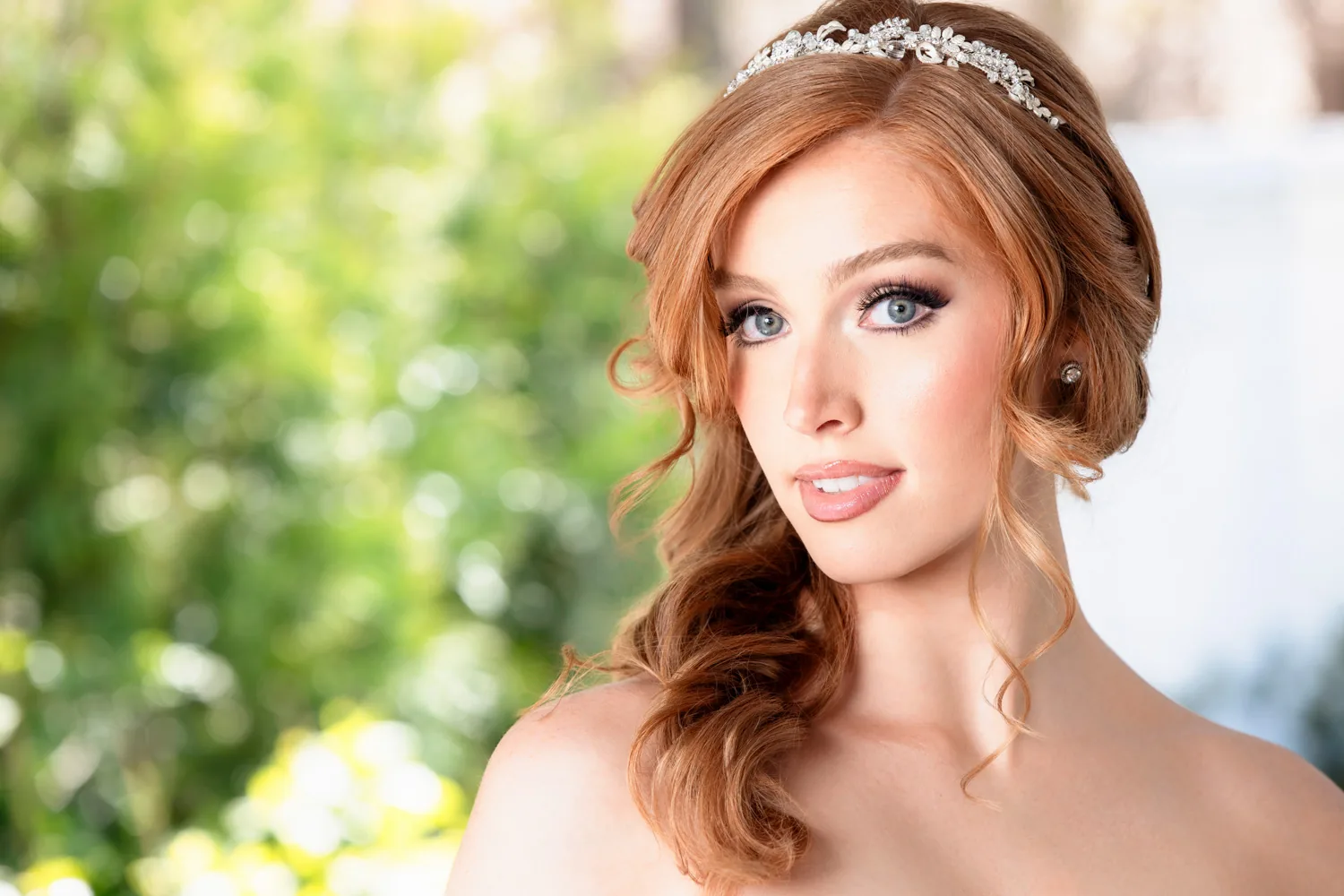
Your hairstyle directly affects how visible your face is during your ceremony.
Quick answer: when couples turn inward toward each other at the altar, hair styled forward can fall into the face line and block your expressions during the moments that matter most — the vows, the first kiss, and walking back down the aisle. Wearing your hair up, or styled back off the face, keeps you fully visible.
Who This Is For
This is for brides deciding how to wear their hair on the wedding day, especially if you’re planning to wear it down or styled forward. It’s most relevant for traditional ceremonies where you’ll be standing at the altar and naturally turned inward toward your partner.
What Most Brides Don’t Realize
Most officiants will guide you to turn inward toward each other during the ceremony. From a photography perspective, that means your photos are captured from a profile angle, so the side of your face facing your guests and the camera becomes the dominant view. If your hair falls forward on that side, it can partially block your face during key moments.
What I See on Wedding Days
After photographing weddings across New Jersey, Long Island, Brooklyn, and Westchester, this comes up at almost every wedding where the bride wears her hair down and styled forward.
At a recent wedding at Park Château Estate & Gardens, the couple had an incredible moment during the recessional. As they walked back down the aisle, the groom dipped the bride with all of their friends and family celebrating behind them. Everything about the moment was there — the energy, the emotion, the timing. But because of how the bride’s hair was parted and styled forward, it fell across her face and partially blocked it. That moment happens once. There’s no resetting it.
Portraits vs. Ceremony
During portraits, I’m actively guiding and adjusting details like hair placement, angles, and positioning. If something falls out of place, we fix it in the moment.
The ceremony is different. That’s where I step back and document your story as it naturally unfolds — I’m not stepping in to adjust hair right before your first kiss or as you walk back down the aisle. Portraits are guided. The ceremony is documented.
How to Keep Your Face Visible
The simplest way to make sure your face is fully visible is to wear your hair up, or styled back off the face. If you prefer wearing it down:
- Keep the side facing the camera open
- Part your hair based on how you’ll be positioned
- Avoid heavy front sections falling into your face
- Be mindful of how your hair moves
- If you have a preferred side of your face, position yourself at the altar so that side is naturally more visible
Your Hair Is Part of the Portrait
Your wedding-day hairstyle doesn’t just affect how you look. It affects how much of your face we can see and photograph throughout the day.
During many ceremonies, the right side of the bride’s face is the one turned toward the guests. If you’re wearing your hair down and a lot of it falls over that shoulder, it can partially hide your face during the vows, the ring exchange, and some of the most emotional moments of the ceremony.
That’s why I love hairstyles that keep the hair off the shoulders or swept back from the face. An updo, a half-up style, or simply keeping your hair behind the shoulders lets us see more of your face, opens up your neckline, and creates a clean, beautiful silhouette.
It also gives us far more freedom during portraits. With the jawline and neckline visible, side profiles and those elegant over-the-shoulder bridal portraits photograph beautifully from many more angles.
Love your hair down? Absolutely wear it down. Just consider a style that keeps your face open and your hair behind your shoulders.
The goal isn’t to change how you look. It’s to make sure that when the moments happen, we can see you.
Movement Changes Everything
Hair doesn’t stay perfectly in place. During moments like walking down the aisle, the first kiss, a dip, or your first dance, it naturally shifts forward with movement. That’s when faces get blocked — not when you’re standing still.
How I Prepare My Couples
About two weeks after booking, I schedule a timeline call where we map out the entire wedding day and walk through the details that directly impact how your photos look. Your hairstyle is one I always bring up: if you’re turned inward at the altar and your hair is styled forward, it can block part of your face. I also guide you on moments beyond the ceremony, like your first dance, where hair can fall forward during close, intimate moments. These aren’t things you should have to think about in real time, which is why I guide you through them ahead of time.
Working With Your Hair Stylist
Experienced bridal hairstylists often already take this into account, while many brides may never realize it matters unless someone brings it up. The best stylists I’ve worked with ask which side the bride will be standing on at the altar, so they can design the hairstyle with both beauty and visibility in mind — adjusting the part, recommending which side to stand on, or styling the hair back or up so the face stays visible during the vows and first kiss.
What a Perfect Ceremony Image Looks Like
- Both faces clearly visible
- Nothing blocking expression
- Real connection between you
- Emotion fully seen
When your styling and positioning support that, the image feels effortless and timeless.
My Approach
Before the wedding day, I guide my couples through the small details — which side of your face is most open, how your hair is parted, and how you’ll be positioned during the ceremony. Not to control the moment, but to make sure nothing gets in the way of it. I guide when it matters, and step back when it matters most.
Final Thought
Your hairstyle should reflect you first. This isn’t about changing your vision — it’s about making sure nothing unintentionally blocks your face during the moments you’ll look back on the most. When everything is aligned — your styling, your positioning, and the way the moment unfolds — you get images that feel open, emotional, and completely true to you.
Frequently Asked
Should I wear my hair up or down for my wedding?
It depends on how visible you want your face to be during the ceremony. When couples turn inward toward each other at the altar — which most officiants will guide you to do — your photos are captured from a profile angle, so the side of your face toward your guests becomes the dominant view. If your hair falls forward on that side, it can partially block your face during the vows, the first kiss, and the recessional. Hair up, or styled back off the face, keeps you fully visible.
Can I still wear my hair down on my wedding day?
Absolutely — your hairstyle should reflect you first. If you prefer wearing it down, keep the side facing the camera open, part your hair based on how you’ll be positioned at the altar, avoid heavy front sections falling into your face, be mindful of how your hair moves, and if you have a preferred side of your face, position yourself so that side is naturally more visible.
Does hair over the shoulders affect bridal portraits too?
Yes. Hair swept back or kept off the shoulders opens up your neckline and creates a clean silhouette, and it gives us far more freedom during portraits. With the jawline and neckline visible, side profiles and over-the-shoulder bridal portraits photograph beautifully from many more angles. If you love your hair down, wear it down — just consider a style that keeps your face open and your hair behind your shoulders. The goal isn’t to change how you look, it’s to make sure that when the moments happen, we can see you.
Why can’t the photographer just fix my hair during the ceremony?
Because portraits are guided and the ceremony is documented. During portraits, I’m actively adjusting details like hair placement, angles, and positioning — if something falls out of place, we fix it in the moment. The ceremony is different. That’s where I step back and document your story as it unfolds. I’m not stepping in to adjust hair right before your first kiss or as you walk back down the aisle.
When does hair actually fall into the face?
During movement, not when you’re standing still. Walking down the aisle, the first kiss, a dip, your first dance — that’s when hair naturally shifts forward and faces get blocked. At a recent wedding at Park Château Estate & Gardens, the groom dipped the bride during the recessional with everyone celebrating behind them. The energy, emotion, and timing were all there, but because of how her hair was parted and styled forward, it fell across her face. That moment happens once.
Should I mention this to my hair stylist?
Yes, and the best ones will already be thinking about it. Experienced bridal hairstylists often ask which side the bride will be standing on at the altar so they can design the hairstyle with both beauty and visibility in mind — adjusting the part, recommending which side to stand on, or styling the hair back or up so the face stays visible during the vows and first kiss.
When do you talk to couples about details like this?
About two weeks after booking, I schedule a timeline call where we map out the entire wedding day and walk through the details that directly impact how your photos look. Your hairstyle is one I always bring up, along with moments beyond the ceremony like your first dance, where hair can fall forward during close, intimate moments. These aren’t things you should have to think about in real time, which is why I guide you through them ahead of time.