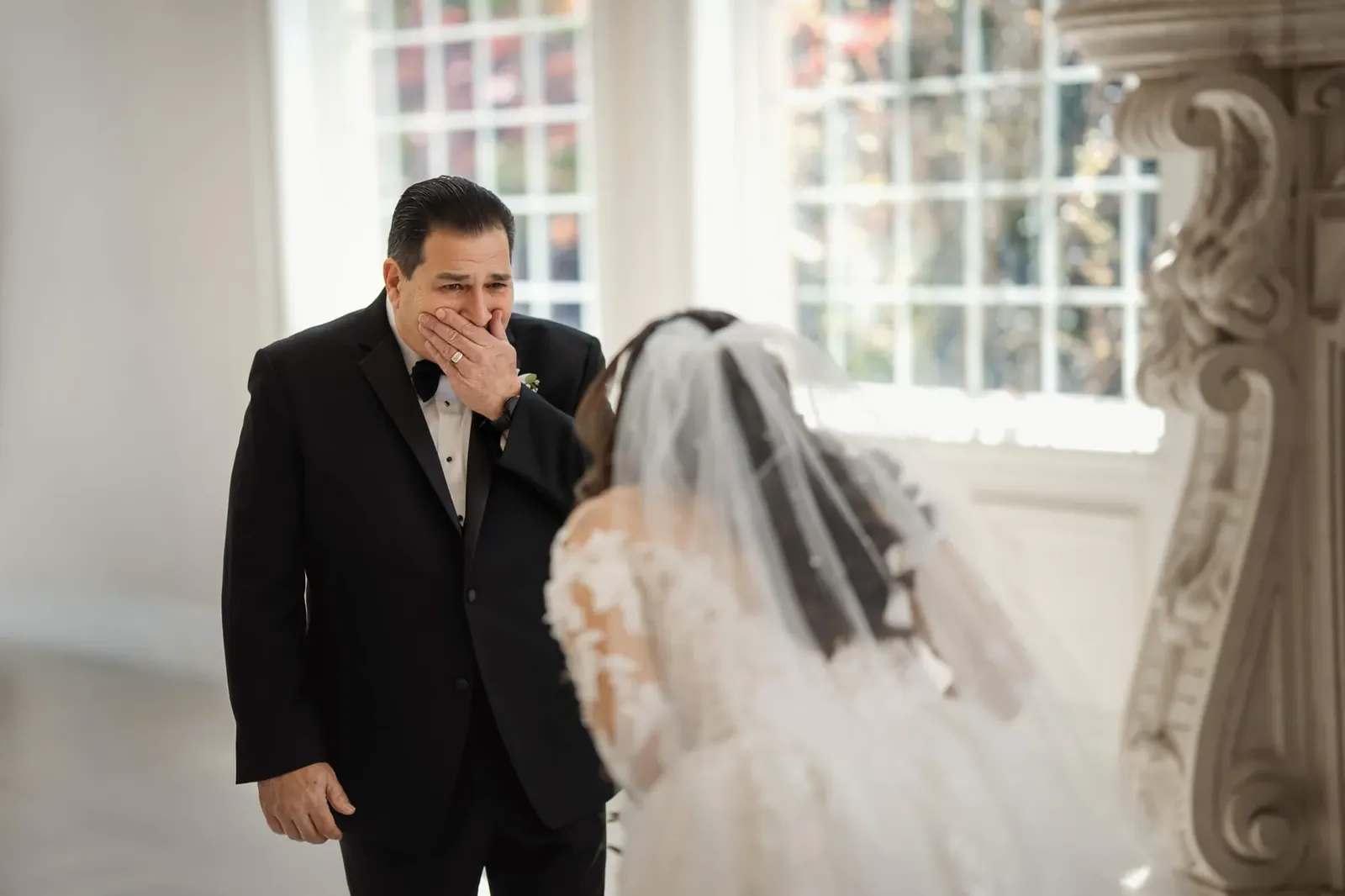
Your wedding day doesn’t begin at the ceremony, it starts with those unforgettable hours of getting ready.
The anticipation, the laughter with your bridal party, the emotional moments with family, and the carefully chosen details all set the stage for the story of your wedding. As a photographer specializing in New Jersey and Long Island wedding photography, George has seen firsthand how a little planning during prep can make or break your photos.
When the morning runs smoothly, your images feel elegant, emotional, and timeless. When it doesn’t, rushed timelines, dark rooms, and cluttered spaces create avoidable disasters. Here’s how to make sure your prep photos are as beautiful as the rest of your day.
Why Prep Photos Matter
Prep photos are more than “getting ready pictures.” They’re the opening chapter of your wedding album, the images that introduce the story before you walk down the aisle. During this time George captures:
- The details (dress, suit, shoes, rings, florals, stationery, heirlooms)
- The candid moments (laughter with friends, emotional reactions from family, a private letter exchange)
- The final touches (buttoning a jacket, zipping a gown, veil placement)
- The atmosphere, the light, the energy, and the emotion in the room
George’s approach is editorial and timeless: refined portraits, and the candid moments of the morning as they happen. That balance is what makes prep photos feel both elevated and real, and it’s the same approach he brings to the rest of your wedding day.
The Biggest Prep Photo Mistakes
Cluttered Rooms: The Silent Album Killer
Nothing ruins prep photos faster than clutter, suitcases and garment bags, half-empty water bottles, coffee cups, food wrappers, makeup, phones, and chargers. The background of your images is just as important as the subject, and clutter distracts from the emotion and elegance of the moment. There’s a hidden cost, too: a cluttered room often leads to more editing requests, and every stray item removed in retouching takes time and can mean additional fees. A messy room doesn’t just affect your photos, it can cost you money.
How to fix it: Designate a clutter corner away from the main area. Ask your bridal party to keep their belongings organized. Choose a spacious room with clean walls and natural light whenever possible.
Late Access to the Bridal Suite
It’s easy to plan your hair and makeup schedule backward from the ceremony time, then learn on the morning of the wedding that the bridal suite or hotel room won’t be ready until later than you expected. When the room opens late, the whole morning starts behind before anyone has picked up a brush.
How to fix it: Ask your venue or hotel early, and get the answer in writing: what time can you actually get into the bridal suite or getting-ready room? Share that time with your hair and makeup team and plan their start times around it, not just around the ceremony. If the room opens too late for your schedule, ask about early check-in or plan for hair and makeup to begin somewhere else.
Rushed Hair & Makeup
One of the most common prep disasters is hair and makeup running late, and it happens at almost every wedding. Even with the best artists, the process almost always takes longer than expected. When it goes overtime it creates a domino effect: suddenly you’re behind before the day has begun, portraits get rushed, candids get skipped, and the stress in the room skyrockets. Once you fall behind it’s nearly impossible to catch up.
The solution: Build in extra time for hair and makeup. Give your stylists a hard stop time, when they must be finished, so you stay on schedule. Plan for the bride to be completely ready at least 30 minutes before departure or the ceremony start. This small adjustment keeps your morning calm and lets you step into the rest of the day relaxed and looking polished.
Overlapping Schedules
If the groom and groomsmen aren’t dressed when photography is scheduled, George misses important moments or has to rush through them. Make sure everyone knows their call time and is ready before coverage begins.
Skipping the Details
Your rings, invitations, jewelry, and other details tell part of your wedding story. If they aren’t set aside, they can be overlooked. Place all details in a box or tray before your photographer arrives.
The Room Makes a Difference
The space where you get ready has a dramatic effect on the look and feel of your images. Large, well-lit rooms allow for flattering portraits, elegant detail shots, and real, candid moments without distraction. The difference is clear at venues like Water’s Edge in Centerport, The Crystal Plaza in Livingston, Celebrate at Snug Harbor on Staten Island, The Watermill Caterers, The Park Château, or Giorgio’s in Baiting Hollow.
They offer spacious, beautifully designed suites with natural light and clean backdrops, which means clean, soft-looking skin and room to move naturally. By comparison, a cramped house or dark hotel room brings limited space, cluttered corners, and less flattering light. Professional lighting helps, but nothing compares to the glow of natural light pouring into a spacious prep room.
Pro tip: If you have the option, lean toward a larger prep space. It’s one of the simplest ways to elevate your photos before the ceremony even begins.
Recommended Prep Timelines
To capture everything without rushing, we recommend:
- Groom prep: 1.5 hours, time for details, candids, portraits, and relaxed group shots.
- Bride prep: 2 hours minimum, hair, makeup, details, bridesmaids, and family moments need more time, plus a cushion if hair and makeup runs late.
This timing lets George deliver a balance of editorial portraits and real moments that makes your album feel complete.
What’s Captured During Prep
Groom Prep
- Details: suit or tux on the hanger, shoes, cufflinks, watch, boutonniere, letter or gift.
- Getting ready: tying a tie, buttoning the jacket, laughter with groomsmen, toasts.
- Portraits: groom alone (editorial-style), groom with best man, groomsmen group shots, family interactions.
- Atmosphere: quiet reflections, candid moments, the energy of the room.
Bride Prep
- Details: dress on the hanger, shoes, veil, bouquet, jewelry, vow books, rings, invitation suite.
- Getting ready: hair and makeup touches, bridesmaids helping with the dress and veil, a letter or gift exchange.
- Bridal party: matching robes, champagne toast, laughter, group portraits.
- Emotional highlights: first look with bridesmaids, first look with parents, quiet reflective portraits.
How Prep Photos Shape Your Album
Prep photos give your wedding album its rhythm and flow. They create the opening chapter that builds anticipation before the ceremony, balance between editorial portraits and candid storytelling, and the depth and emotion that make the later images more meaningful. Couples often tell us their prep photos, those unscripted laughs, emotional first looks, and quiet reflections, are some of the most cherished images in their entire collection.
Final Thoughts
The getting-ready portion of your wedding deserves as much care as the ceremony or reception. By planning enough time, choosing a clean and spacious prep room, and preparing your details in advance, you’ll avoid stressful disasters and create images that are beautiful, timeless, and magazine-worthy. If you’re planning a wedding in New Jersey, Long Island, or Brooklyn, we’d love to help guide you through a prep experience built around editorial portraits and real moments.
Frequently Asked
Why do getting-ready photos matter?
They’re the opening chapter of your wedding album — the images that introduce the story before you walk down the aisle. During prep George captures the details (dress, suit, shoes, rings, florals, stationery, heirlooms) and the candid moments (laughter with friends, emotional reactions from family, a private letter exchange). He also captures the final touches (buttoning a jacket, zipping a gown, veil placement) and the atmosphere, light, and energy of the room. Couples often tell us these, particularly the unscripted laughs and emotional first looks, are some of the most cherished images in their entire collection.
What is the biggest mistake in getting-ready photos?
Clutter. It is the most damaging and most common problem. Suitcases and garment bags, half-empty water bottles, coffee cups, food wrappers, makeup, phones, and chargers all end up in the frame.
The background of your images is just as important as the subject, and clutter distracts from the emotion and elegance of the moment. There’s a hidden cost too: a cluttered room leads to more editing requests, and every stray item removed in retouching takes time and can mean additional fees. Designate a clutter corner away from the main area and ask your bridal party to keep their belongings organized.
How much time should I allow for hair and makeup?
More than your artists quote you. Hair and makeup running late is one of the most common prep disasters and it happens at almost every wedding — even with excellent artists, the process almost always takes longer than expected.
When it runs over, portraits get rushed, candids get skipped, and the stress in the room skyrockets. Once you fall behind, it’s nearly impossible to catch up. Build in extra time, give your stylists a hard stop time when they must be finished, and plan for the bride to be completely ready at least 30 minutes before departure or ceremony start.
How long should I schedule for prep photo coverage?
Groom prep: 1.5 hours, which allows time for details, candids, portraits, and relaxed group shots. Bride prep: 2 hours minimum, because hair, makeup, details, bridesmaids, and family moments need more time, plus a cushion if hair and makeup runs late. This timing is what lets George deliver a balance of editorial portraits and real moments that makes your album feel complete.
Does the getting-ready room really affect my photos?
Dramatically. Large, well-lit rooms allow for flattering portraits, elegant detail shots, and real, candid moments without distraction. The difference is clear at venues like Water’s Edge in Centerport, The Crystal Plaza in Livingston, Celebrate at Snug Harbor, The Watermill Caterers, The Park Château, or Giorgio’s in Baiting Hollow.
They offer spacious suites with natural light and clean backdrops, which means clean, soft-looking skin and room to move naturally. A cramped house or dark hotel room brings limited space, cluttered corners, and less flattering light. Professional lighting helps, but nothing compares to natural light in a spacious prep room.
What causes prep timelines to fall apart?
Overlapping schedules, mainly. If the groom and groomsmen aren’t dressed when photography is scheduled, George misses important moments or has to rush through them. So make sure everyone knows their call time and is ready before coverage begins. The other one is skipping the details: your rings, invitations, and jewelry tell part of your story, and if they aren’t set aside in a box or tray before George arrives, they get overlooked.