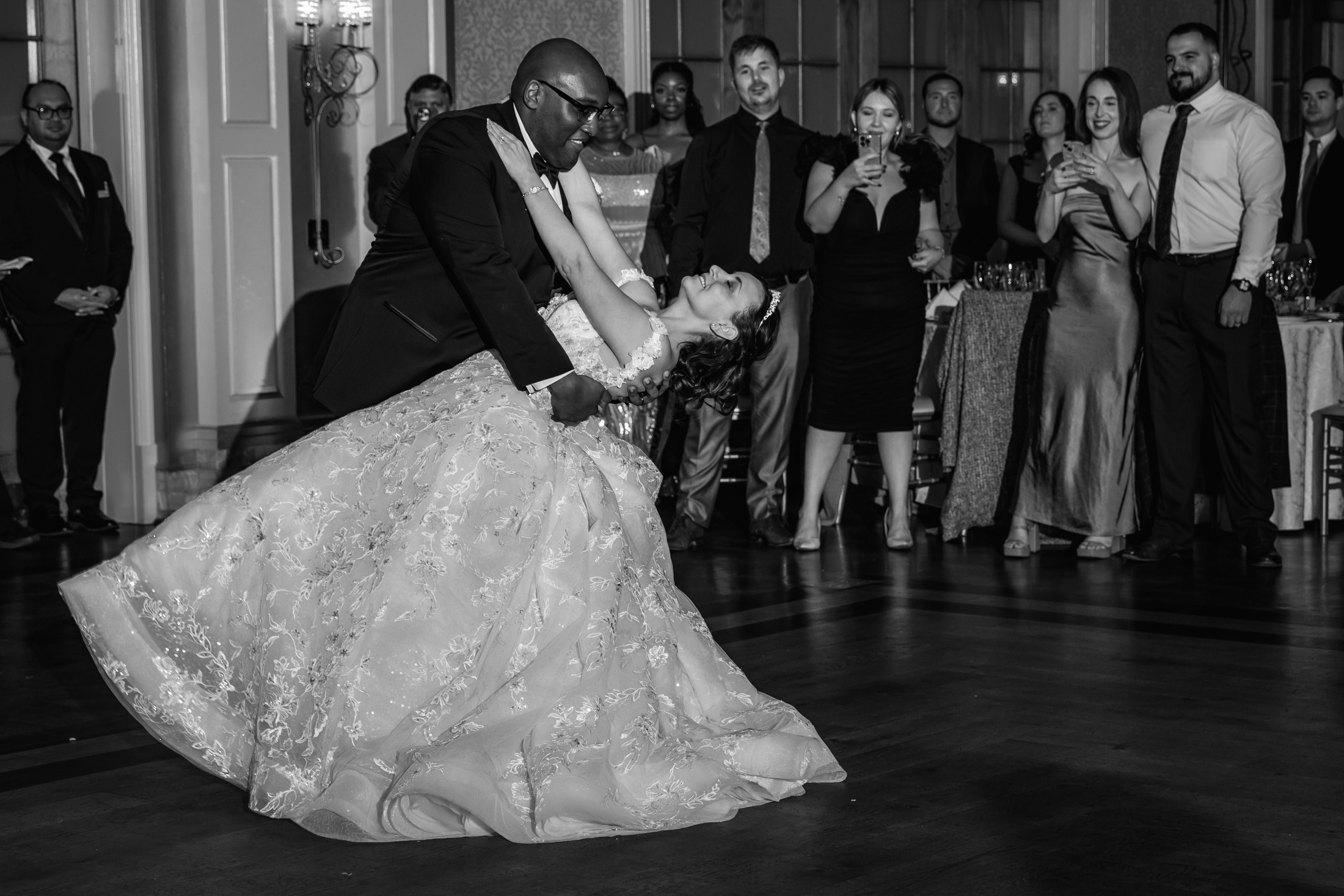
A simple dip, done safely, is one of the frames you’ll want to look back on — at the end of your first dance, and walking back down the aisle.
You don’t need a choreographed routine. You need a solid stance, a secure hold, and a pause long enough that both faces are visible. I season every wedding to taste, so the balance always fits the couple, including how quiet or dramatic that dip feels. I photograph couples across Long Island and New Jersey, and this is a moment worth practicing before the day.
The 30-Second Version
- Stance: the leader steps into a side lunge and stays upright.
- Hold: support your partner around the waist and upper back, and keep them close.
- Depth: don’t go too low. Almost nose to nose is often the nicest look. Hold for at least three seconds.
- On the aisle: switch the bouquet out of the way, and keep the person who isn’t turning facing the camera, down the aisle.
- Practice at home, in the shoes you’ll wear, before the wedding day. Tell your photographer you’re planning it.
Below is how to learn it, in the order I’d practice, with the short tutorials I recommend.
1. Footwork
Start with your feet. If the stance isn’t solid, the dip won’t feel safe.
In How to Dip your Dance Partner, Duet Dance Studio teaches a simple dip from a basic box step.
- The leader finishes the box and takes an extra side step to the left, into a side lunge.
- Keep your weight on the left foot, with both feet on the ground, and keep your body upright.
- Your partner follows with an extra step to the right: right knee bent, weight on the right foot, left leg extended forward, body perpendicular to you.
Key cue: do not lean in toward your partner. Leaning puts your weight toward the ground, which can strain their back or cause you to drop them.
Practice the lunge on your own first. The lesson is just over a minute.
2. Upper-Body Support
Once the lunge feels familiar, add the hold.
In How To Dip Your Partner — First Dance Basics!, The Next Step Co. breaks down a classic dip.
- The partner being dipped stands at a right angle to the leader, with the right arm around the leader’s shoulders, weight on the inside (right) leg, and the left foot forward with no weight on it.
- The leader wraps the right arm around the waist, hand firm on the back just below the ribs. That lower arm holds more of the weight.
- The left hand sits flat at the top of the back, mainly for balance. The arm around the waist should be all the way around, keeping your partner close and secure.
- Lunge directly to the side, then twist and hinge so you stay almost face to face.
Key cue: the dip does not have to be extremely low. The nicest dips are often almost nose to nose, at a depth that is comfortable for both of you. Hold for at least three long seconds — long enough to feel the moment, and long enough to photograph it.
3. The Full Dip
Footwork plus support is the dip. This short from Natural Dance Method shows the full body in motion, including three ways to enter a simple dance dip.
Use it as a visual once you’ve practiced the stance and the hold.
4. The Aisle Dip Kiss
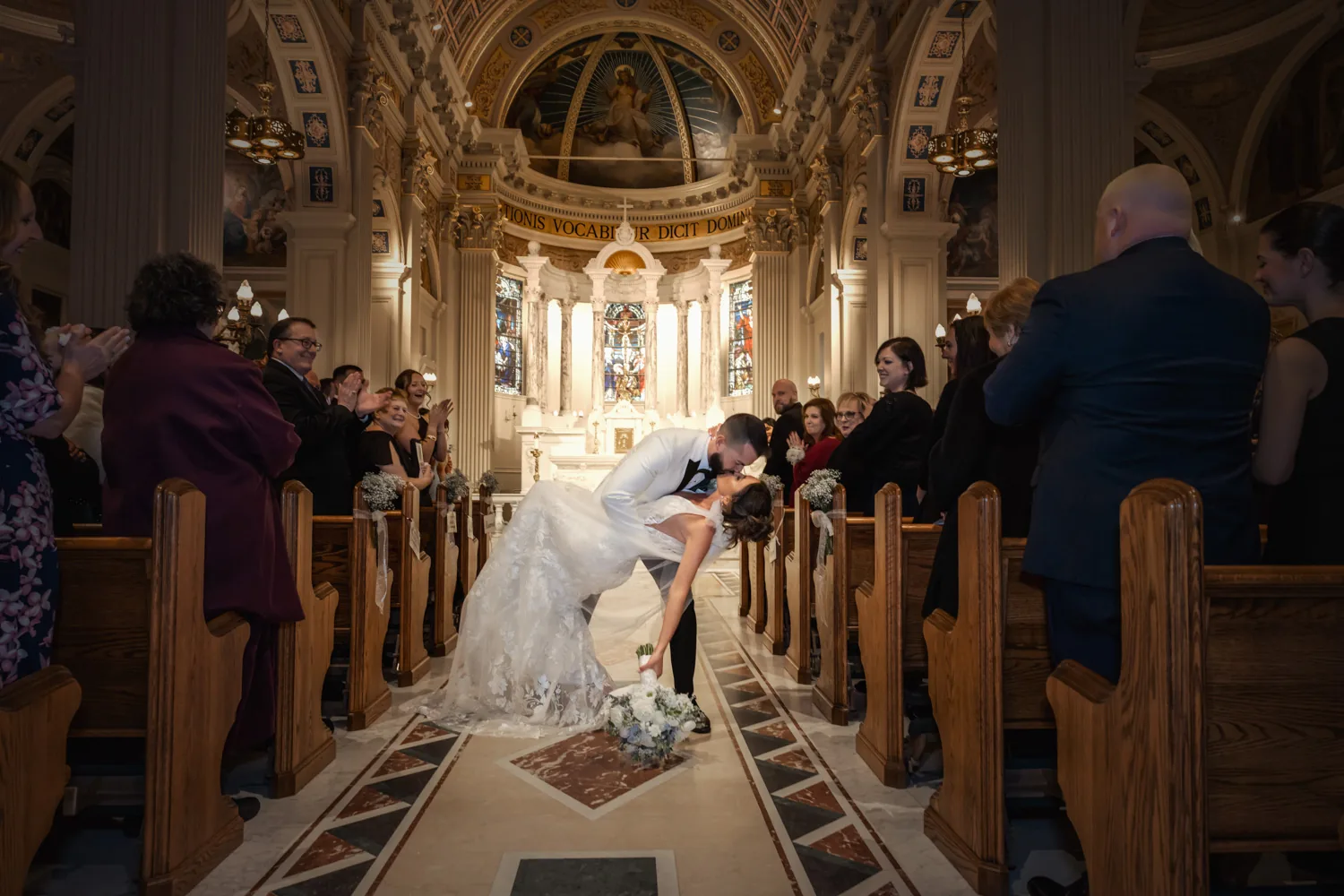
Walking back down the aisle is a different dip. You have a bouquet, a narrower path, and a photographer — usually at the end of the aisle.
In How to Dip Kiss on your Wedding Day, Higgins Photo & Film walks through a simple recessional dip kiss:
- The bouquet starts in the right hand.
- The person holding it turns in, switches the bouquet to the left hand, and brings the right arm over their partner’s shoulder.
- Dip and kiss.
- Come back up, turn back out, switch the bouquet to the right hand again, and keep walking.
Key cue: the person who is not turning in should stay facing forward the entire time — toward the end of the aisle, and toward the camera. If they turn in, you often can’t see the faces.
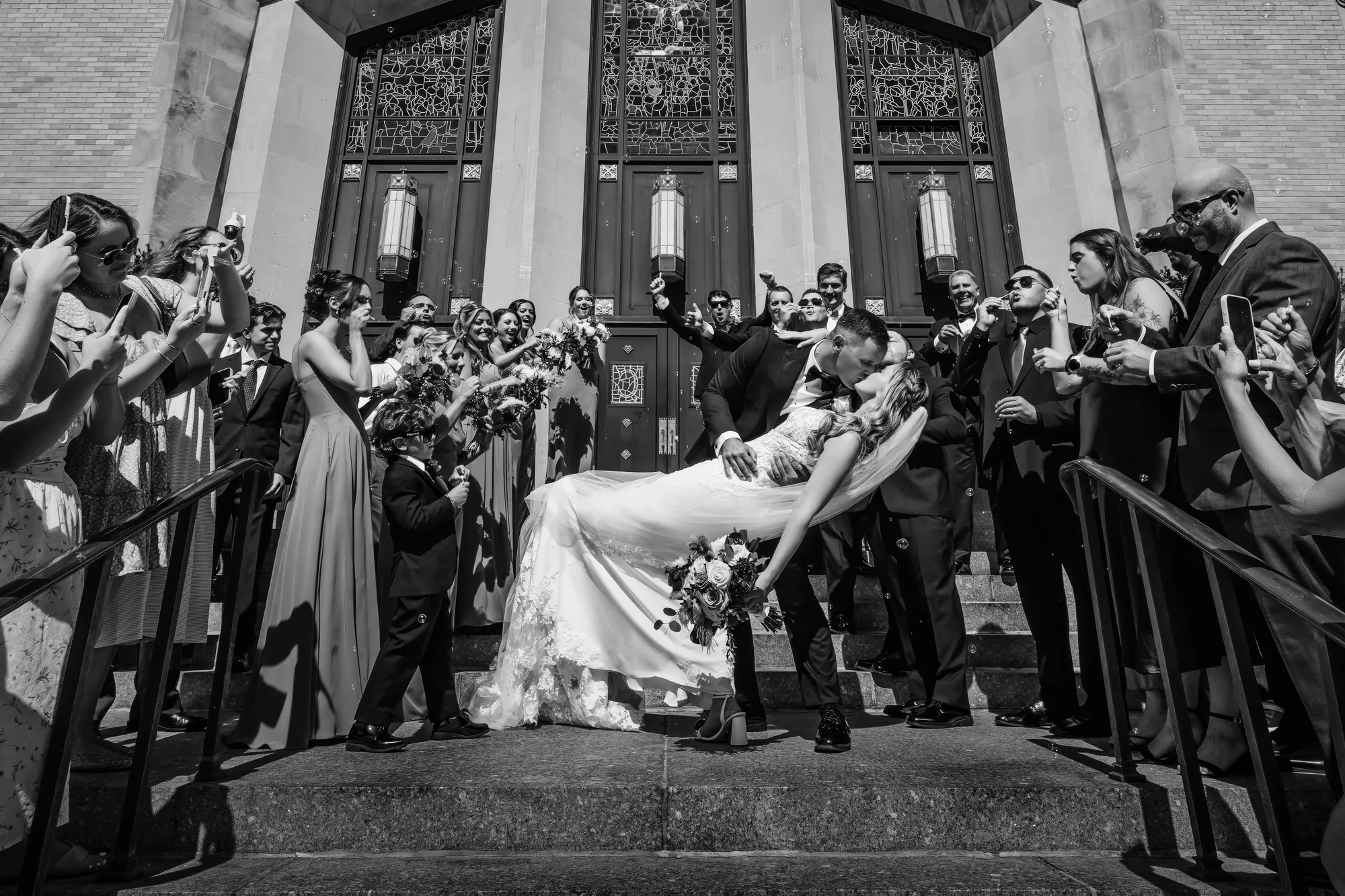
The same dip can happen just outside, on the church steps, as guests gather around. The cues don’t change: faces visible, bouquet out of the way, and a hold long enough to photograph.
How to Make It Photograph Well
From behind the camera, these are the things that make the frame:
- Hold it for at least three seconds. A quick dip is hard to photograph and even harder to feel.
- Keep your faces toward the camera. On the aisle, the person who isn’t turning in stays facing forward. On the dance floor, staying almost face to face photographs more naturally than a dip so deep that faces disappear.
- You don’t have to go low. If it doesn’t feel solid in practice, go less deep.
- Watch the bouquet. Switch it out of the way so it doesn’t cover the kiss.
- Tell me you’re planning it. If I know a dip is coming, I can be in the right place. It is a one-time moment. There is no resetting it.
One more detail: hair styled forward can fall across the face during a dip. If you love your hair down, wear it down — just keep the side toward the camera open. I walk through that in my guide to wedding-day hairstyles.
Practice Checklist
- Practice the footwork alone, then the hold together, then the full dip.
- Practice the aisle version separately, including the bouquet switch.
- If you can, practice in the shoes you’ll wear — and the dress, if you get a chance. Heels change your balance.
- If you’re doing an aisle dip, try it at the rehearsal so you know you have enough room.
- Practice before the wedding day, not for the first time in front of your guests.
- Don’t surprise your partner with a dip you haven’t tried together.
- If it doesn’t feel solid, go less deep and practice again until it does.
Common Mistakes
- The leader leans forward instead of staying upright.
- The dip goes too low and feels unstable.
- You come up too fast, with no pause for the kiss or the photo.
- On the aisle, both of you turn in, and the camera sees the back of a head.
- The bouquet covers the kiss.
- You try it for the first time on the wedding day.
A Short Safety Note
A good-looking dip is a safe one. Keep the leader’s body upright. Use the legs in a side lunge, not the lower back. Keep your partner close, with support around the waist and upper back. Only go as deep as both of you can comfortably hold and stand back up from. If something feels off, stop and reset.
Final Thought
Learn the stance, learn the hold, and put them together. If you want it on the aisle, practice the bouquet switch and the facing-forward angle. Then hold still long enough to enjoy it.
I photograph weddings with editorial direction and real moments, lighting with intention. If you’re planning yours on Long Island or in New Jersey, we can talk through a moment like this on a consultation call so it feels like you.
Frequently Asked
Do we need a choreographed first dance?
No. A simple dip is enough. You can add it to a first dance you already feel comfortable with, or use it at the end of the song.
How low should the dip be?
Only as low as is comfortable for both of you. The Next Step Co. notes that the nicest dips are often almost nose to nose. A shallower, steady dip photographs better than a deep one that feels unstable.
Can we do a dip walking back down the aisle?
Yes. Practice that version separately, because you also have a bouquet and a narrower path. Switch the bouquet out of the way, and keep the person who isn’t turning facing forward. Tell your photographer you’re planning it so they can be ready at the end of the aisle.
How long should we hold it?
At least three seconds. That is long enough for the kiss to land and long enough to photograph well.
What if we’re not dancers?
Start with the footwork, then add the hold, then try the full movement. Practice at home, in a clear space, and stay at a depth that feels solid.